
एलिफंटा लेणी, मुंबईपासून सुमारे ११ किलोमीटर अंतरावर वसलेली, भारतातील सर्वात प्रसिद्ध पर्यटन स्थळांपैकी एक मानली जातात. इतिहास, कला, संस्कृती आणि निसर्ग यांचा सुंदर संगम येथे पाहायला मिळतो. घारापुरी किंवा “लेण्यांचे नगर” म्हणून ओळखल्या जाणाऱ्या या बेटावर असलेली लेणी युनेस्कोच्या जागतिक वारसा यादीत समाविष्ट असून पर्यटकांना प्राचीन भारताच्या शिल्पकला आणि वास्तुकलेचा थाट अनुभवायला मिळतो. पाचव्या ते सातव्या शतकात कोरलेल्या या लेण्या प्रामुख्याने भगवान शिवाला अर्पण करण्यात आल्या असून येथील अप्रतिम शिल्पकृती हिंदू पुराणकथांचे दर्शन घडवतात.
लेण्यांमधील सर्वात प्रसिद्ध आकर्षण म्हणजे भव्य महेशमूर्ती – भगवान शिवाची त्रिमुखी प्रतिमा, जी शिवाच्या सर्जनकर्ता, पालनकर्ता आणि संहारकर्ता या तीन रूपांचे प्रतीक आहे. याशिवाय, अर्धनारीश्वर (शिव-पार्वतीचे संयुक्त रूप), गंगाधर (गंगेचा अवतरण प्रसंग) आणि नटराज (शिवाचा तांडव नृत्य) यांसारख्या शिल्पकृती देखील अप्रतिम आहेत. प्रत्येक कोरीवकामात अध्यात्मिकता आणि कलात्मकतेचे सुंदर दर्शन घडते.लेण्यांपुरतेच नव्हे तर संपूर्ण बेटच पर्यटकांच्या अनुभवात भर घालते. अरबी समुद्राच्या निळ्या पाण्याने वेढलेले हे बेट मुंबईच्या गजबजलेल्या जीवनातून एक शांत विसावा देते. गेटवे ऑफ इंडियावरून जाणारा रमणीय फेरी प्रवास पर्यटनाच्या अनुभवाला आणखी संस्मरणीय बनवतो. लेण्यांच्या परिसरातील स्थानिक विक्रेते आणि लहान दुकाने येथे पारंपरिक रंगत आणतात.
एलिफंटा घारापुरी लेणी केव्हा खोदल्या गेल्या याचे लिखित पुरावे सापडले नाहीत. इसवी सन सहाव्या शतकामध्ये एलीफंटा लेणी खोदल्या गेल्या असाव्यात असे तज्ञांचे मत आहे. येथील लेणी वाकाटक आणि कलचुरी घराण्यातील राजांनी खोदलेल्या आहेत. तर काही तज्ञांच्या मते ही लेणी चालुक्य आणि राष्ट्रकूट राजांनी खोदलेल्या आहेत.एलीफंटा लेणी शैव पंथातील पाशुपत संप्रदायाला समर्पित आहेत.
एलिफंटा लेण्यांमधील नेत्रदीपक वास्तुकला आणि शिल्पकला
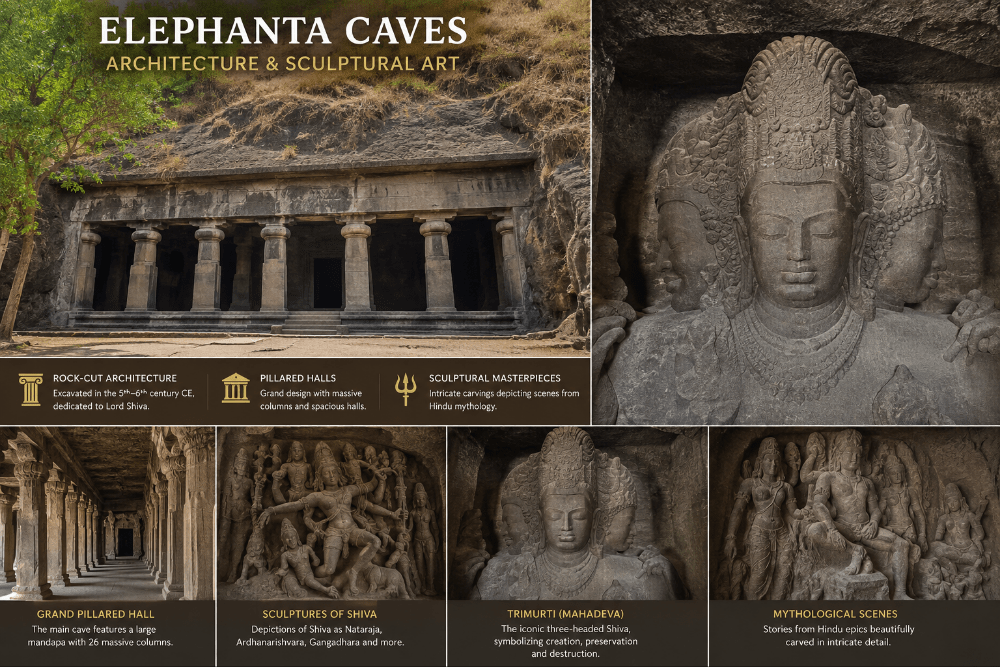
एलिफंटा लेणी पाशुपत स्थापत्य शैलीचा उत्कृष्ट आविष्कार आहेत. या लेण्यांमध्ये प्रामुख्याने शिवाच्या विविध अवतारातील अद्वितीय प्रतिमा आहेत. तसेच रामायण ,महाभारत यातील प्रसंगावर आधारित शिल्पकाम देखील या लेण्यांमध्ये पाहावयास मिळते. पूर्व पश्चिम आणि उत्तर अशा तीन बाजू या लेण्याला आहेत. उत्तरेकडील प्रवेश मंडप हेच मुख्य प्रवेशद्वार आहे. या ठिकाणी एकूण सात लेणी आहेत. त्यापैकी क्रमांक एक ते पाच या हिंदू लेणी आहेत तर क्रमांक सहा आणि सात या बौद्ध लेणी आहेत.घारापुरी येथील बेटावर तीन गावे असून सुमारे दोन हजार लोक वस्ती आहे.
एलिफंटा लेण्यांची वास्तुकला: भारतीय शैल-स्थापत्य कलेचा एक उत्कृष्ट नमुना
मुंबईच्या खाडीतील एलिफंटा बेटावर वसलेल्या एलिफंटा लेण्या या भारतातील शैल-स्थापत्यकलेची (खडक कोरून केलेल्या वास्तुकलेची) अत्यंत उल्लेखनीय उदाहरणे आहेत. इसवी सनाच्या ६ व्या ते ८ व्या शतकातील या लेण्या प्राचीन भारतीय कारागिरांचे कलात्मक नैपुण्य आणि अभियांत्रिकी कौशल्य दर्शवतात. प्रामुख्याने भगवान शिवाला समर्पित असलेल्या या लेण्यांमध्ये वास्तुकला, धार्मिक प्रतीके आणि उत्कृष्ट शिल्पकला यांचा सुरेख संगम आढळतो; म्हणूनच त्या भारतातील युनेस्कोच्या (UNESCO) अत्यंत प्रसिद्ध जागतिक वारसा स्थळांपैकी एक आहेत.
या लेण्या बेटावरील कठीण बेसाल्ट खडकात साध्या हाताच्या अवजारांचा वापर करून कोरल्या गेल्या आहेत. स्वतंत्र दगड वापरून इमारती बांधण्याऐवजी, कारागिरांनी पर्वतच कोरून काढला आणि त्यातून प्रशस्त सभागृहे, मंदिरे, स्तंभ व शिल्पे एकाच अखंड खडकातून साकारली. या तंत्रासाठी विलक्षण अचूकतेची आवश्यकता होती, कारण खोदकाम करताना झालेली कोणतीही चूक सुधारणे शक्य नव्हते.
येथील सर्वात प्रभावी रचना म्हणजे ‘लेणी क्रमांक १’, जिला ‘ग्रेट केव्ह’ (महालेणी) म्हणूनही ओळखले जाते. तिची रचना सुमारे ३९ चौरस मीटर आकाराच्या, स्तंभांनी युक्त अशा एका मोठ्या सभागृहासारखी केली आहे. या सभागृहाला उशीच्या आकाराची शीर्षके (कॅपिटल्स) असलेल्या भव्य दगडी स्तंभांच्या रांगांचा आधार आहे, ज्यामुळे आतील भागात एक समतोल आणि सुसंवाद साधला गेला आहे. हे स्तंभ सभागृहाचे विविध मार्ग (aisles) तयार करतात; ते पर्यटकांना मध्यवर्ती गाभाऱ्याकडे नेतात आणि त्याच वेळी कोरलेल्या छताला आधार देतात.
वास्तुशास्त्राच्या दृष्टीने विचार करता, या लेण्यांमध्ये अचूक रचना, प्रशस्त अंतर्गत भाग आणि प्रमाणबद्धता दिसून येते. शिल्पकारांनी वास्तुकला आणि शिल्पकला यांचा अतिशय सुसंवाद साधला आहे; त्यामुळे ही शिल्पे खडकावर नंतर जोडल्यासारखी न वाटता, त्यातूनच नैसर्गिकरीत्या साकारल्यासारखी भासतात. लेण्यांच्या प्रवेशद्वारातून आत येणारा प्रकाश प्रभावी सावल्या निर्माण करतो, ज्यामुळे शिल्पांची खोली आणि त्यातील भाव अधिक उठावदार दिसतात.
या बेटावरील इतर लेण्या आकाराने लहान आणि कमी विस्तृत आहेत. काही लेण्यांमध्ये शिवाला समर्पित अशी अतिरिक्त मंदिरे आहेत, तर काही लेण्यांचा वापर मठांच्या किंवा साध्या धार्मिक स्थळांच्या स्वरूपात केला जात असे. नंतरच्या ऐतिहासिक काळात अनेक शिल्पांचे नुकसान झाले असले, तरीही शिल्लक राहिलेली शिल्पे आजही उत्कृष्ट कारागिरीचे दर्शन घडवतात.
एलिफंटा लेण्यांची वास्तुकला ही भारतातील ‘खडकात कोरलेल्या वास्तुकलेच्या’ (rock-cut architecture) प्रगल्भ परंपरेचे प्रतिबिंब आहे. ही शैली आधीच्या लेण्यांच्या रचनेने प्रभावित असली, तरी त्यात शैव पंथाशी संबंधित एक अद्वितीय कलादृष्टी दिसून येते. आज या लेण्या प्राचीन भारतीय अभियांत्रिकी कौशल्य, धार्मिक निष्ठा आणि कलात्मक उत्कृष्टतेचा एक कालातीत पुरावा म्हणून उभ्या आहेत. त्यांची भव्य रचना, नक्षीकामातील बारकावे आणि आध्यात्मिक वातावरण जगभरातील इतिहासकार, पुरातत्वशास्त्रज्ञ, वास्तुविशारद आणि पर्यटकांना आकर्षित करत राहते; तसेच खडकात कोरलेल्या वास्तुकलेतील भारताच्या या सर्वोत्तम कामगिरीचा वारसा जतन करते.
एलिफंटा लेण्यांमधील शिल्पकला: शैव प्रतिमाशास्त्राचा एक गौरवपूर्ण आविष्कार
एलिफंटा लेण्यांमधील शिल्पकला ही प्राचीन भारतीय कलेतील एक उत्कृष्ट कामगिरी मानली जाते. इसवी सनाच्या ६ व्या ते ८ व्या शतकादरम्यान कोरलेली ही शिल्पे बेसाल्ट खडकाला हिंदू पौराणिक कथा, तत्त्वज्ञान आणि अध्यात्म यांच्या एका भव्य दालनात रूपांतरित करतात. प्रामुख्याने भगवान शिवाला समर्पित असलेली ही भव्य शिल्पे विलक्षण कलाकौशल्य, धार्मिक प्रतीकात्मकता आणि सौंदर्यात्मक समतोल दर्शवतात. प्रत्येक शिल्प प्राचीन भारतीय शिल्पकारांचे प्रभुत्व प्रतिबिंबित करते; ज्यांनी तांत्रिक अचूकता आणि सखोल आध्यात्मिक अभिव्यक्ती यांचा सुरेख संगम साधला होता.
एलिफंटा येथील सर्वात प्रसिद्ध शिल्प म्हणजे ‘त्रिमूर्ती‘, जिला ‘महेशमूर्ती’ म्हणूनही ओळखले जाते. सुमारे २० फूट (६ मीटर) उंच असलेली ही मूर्ती मुख्य लेण्याच्या (ग्रेट केव्ह) मध्यवर्ती भागात उठून दिसते. तीन मुखे असलेली ही प्रचंड मूर्ती भगवान शिवाच्या तीन मुख्य पैलूंचे प्रतिनिधित्व करते. मध्यवर्ती मुख शांतता, ज्ञान आणि सर्वोच्च चेतनेचे प्रतीक आहे; उजवीकडील मुख निर्मिती आणि करुणेचे प्रतिनिधित्व करते; तर डावीकडील मुख विनाश आणि परिवर्तनशील शक्ती दर्शवते. शांत भाव, नक्षीदार मुकुट, मोहक दागिने आणि अचूक समतोल असलेली रचना ‘त्रिमूर्ती’ला भारतीय शिल्पकलेतील एक महान उत्कृष्ट नमुना बनवते.
आणखी एक उल्लेखनीय शिल्पपट म्हणजे ‘गंगाधर‘, ज्यामध्ये स्वर्गातून पृथ्वीवर पवित्र गंगा नदीचे अवतरण दर्शविले आहे. हिंदू पौराणिक कथांनुसार, पृथ्वीवर वाहू देण्यापूर्वी गंगेचा प्रचंड वेग कमी करण्यासाठी शिवाने तिला आपल्या जटांमध्ये धारण केले होते. शिल्पकारांनी शिव, देवी गंगा, स्वर्गीय प्राणी आणि सेवक यांच्यातील दैवी संवाद अतिशय सुंदररीत्या टिपला आहे, ज्यामुळे गतिमानता आणि आध्यात्मिक प्रतीकात्मकतेने परिपूर्ण अशी रचना साकारली गेली आहे.
‘अर्धनारीश्वर‘ हे शिल्प एकाच शरीरात शिव आणि पार्वतीच्या मिलनचे प्रतिनिधित्व करते, जे पुरुष आणि स्त्री शक्तींमधील सुसंवादाचे प्रतीक आहे. शिल्पकाराने शरीराची ठेवण, वस्त्रे, दागिने आणि शरीरयष्टी यांच्या माध्यमातून पुरुष आणि स्त्री अशा दोन्ही भागांमधील फरक कौशल्याने दर्शविला आहे आणि त्याच वेळी अचूक समतोलही राखला आहे. ही प्रतिमा अशी तत्त्वज्ञानात्मक संकल्पना मांडते की, निर्मिती ही परस्परपूरक शक्तींच्या एकतेवर अवलंबून असते.
तितकेच प्रभावी असे ‘नटराज‘चे शिल्प आहे, ज्यामध्ये शिव विश्वाचे नृत्य (तांडव) करत आहेत. त्यांची गतिमान मुद्रा, प्रवाही हालचाल आणि लयबद्ध रचना हे निर्मिती, जतन आणि विनाश यांच्या शाश्वत चक्राचे प्रतीक आहेत. शिल्पकारांनी कठीण पाषाणाला ऊर्जा, गतिमानता आणि दैवी लावण्य यांनी युक्त अशा प्रतिमेत यशस्वीरीत्या रूपांतरित केले आहे.
‘कल्याणसुंदर‘ शिल्पपट शिव आणि पार्वतीचा दैवी विवाह सोहळा दर्शवतो. देव, ऋषी आणि परिचारक यांच्या सानिध्यातील त्या दिव्य युगुलाच्या (शिव-पार्वती) मुद्रांमधून आनंद, भक्ती आणि पवित्र उत्सवाचे वातावरण प्रतीत होते. ‘कैलास पर्वत हलवणारा रावण’ हे आणखी एक प्रभावी शिल्प असून, त्यात राक्षसराज रावण शिवाची निवासभूमी (कैलास पर्वत) उचलण्याचा प्रयत्न करताना दर्शविला आहे. रावणाची उग्र हालचाल आणि शिवाची शांत व स्थिर मुद्रा यांमधील विरोधाभास, दगडाच्या माध्यमातून भावना आणि कथा व्यक्त करण्याची शिल्पकारांची अद्वितीय क्षमता अधोरेखित करतो.
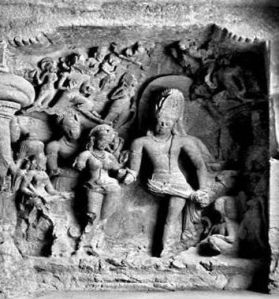
या लेण्यांमध्ये गर्भगृहाच्या प्रवेशद्वाराशी ‘द्वारपाल‘ (रक्षक) यांची भव्य शिल्पेही पाहायला मिळतात. हे उत्तुंग रक्षक दैवी संरक्षणाचे प्रतीक आहेत; त्यांची धिप्पाड शरीरयष्टी, नक्षीदार अलंकार आणि प्रभावशाली मुद्रा मंदिराची पवित्रता अधिकच वाढवतात.
एलिफंटा येथील शिल्पकलेची वैशिष्ट्ये म्हणजे भव्य आकारमान, प्रमाणबद्धता, सुडौल घडण आणि भावपूर्ण चेहेरे-मोहरे. कठीण अशा ‘बेसाल्ट’ खडकातून कोरलेली असूनही, या शिल्पांमध्ये विलक्षण कोमलता आणि प्रवाहीपणा दिसून येतो. वस्त्रे, दागिने, केशभूषा आणि शारीरिक रचनांचे तपशील अत्यंत अचूकतेने साकारले आहेत, तसेच शिल्पांमधील खोली आणि दृश्य परिणामकारकता वाढवण्यासाठी शिल्पकारांनी प्रकाश व सावलीचा (light and shadow) अतिशय कुशलतेने वापर केला आहे.
केवळ सजावटीच्या उत्कृष्ट नमुन्यांपलीकडे जाऊन, एलिफंटा लेण्यांमधील शिल्पे ही ‘दृश्य धर्मग्रंथां’सारखी आहेत, जी शैव पंथाची तात्विक मूल्ये आणि आदर्श मांडतात. त्यांची कलात्मक उत्कृष्टता, प्रतीकात्मक समृद्धता आणि आध्यात्मिक खोली जगभरातील इतिहासकार, पुरातत्वशास्त्रज्ञ, कलाकार आणि पर्यटकांना आजही प्रेरित करत आहे; यामुळेच भारताच्या सांस्कृतिक वारशातील अत्यंत मौल्यवान खजिन्यांमध्ये एलिफंटाचे स्थान अढळ राहिले आहे.
पर्यटकांसाठी सोयी सुविधा एलिफंटा घारापुरी लेणी
एलिफंटा लेणी घारापुरीचे भौगोलिक स्थान रायगड जिल्ह्यातील तालुका उरण येथे आहे.मुंबईच्या प्रसिद्ध गेटवे ऑफ इंडिया येथील समुद्रकिनाऱ्यावरून बोटीने घारापुरीला जाता येते. मुंबई ते एलिफंटा गुंफा अंतर साधारणपणे 11 किलोमीटर इतके आहे.एलिफंटा लेणी येथे पर्यटक दोन ते तीन तास पर्यटनाचा आनंद घेऊ शकतात. या ठिकाणी टॉय ट्रेन मधून सफारी करता येते. विविध प्रकारच्या खाद्यपदार्थांचे स्टॉल्स या ठिकाणी आहेत. या ठिकाणी जाण्यासाठी ऑक्टोबर ते मे महिना अनुकूल असा काळ आहे. एलिफंटा लेणी चा इतिहास, स्थापत्य आणि शिल्पकला यांची माहिती देण्यासाठी पर्यटक मार्गदर्शक गाईड उपलब्ध आहेत. एलिफंटा लेणी देश विदेशातील पर्यटकांचे आकर्षण केंद्र आहे.
🔗 Elephanta Excavation BBC News
सारांश
एलिफंटा लेणी, मुंबईजवळील एलिफंटा बेटावर वसलेली, इतिहास, कला, अध्यात्म आणि निसर्ग यांचा अद्भुत संगम दर्शवतात. युनेस्कोच्या जागतिक वारसा यादीत समाविष्ट झालेल्या या लेण्यांचा उगम पाचव्या ते सातव्या शतकात झाला. कठीण बेसाल्ट दगडातून कोरलेल्या या लेण्या प्राचीन शिल्पकारांच्या अद्वितीय कौशल्याचे दर्शन घडवतात. येथील विशाल दालने, स्तंभ आणि कोरीवकाम तांत्रिक नेमकेपणाबरोबरच हिंदू पुराणकथांशी निगडित धार्मिक भावनांनाही प्रकट करतात.
एलिफंटा लेण्यांतील सर्वात महत्त्वाचे वैशिष्ट्य म्हणजे भगवान शिवाला अर्पण केलेली शिल्पकला. त्यातील सर्वात आकर्षक म्हणजे सुमारे २० फूट उंच महेशमूर्ती, ज्यात शिवाचे सर्जनकर्ता, पालनकर्ता आणि संहारकर्ता हे त्रिरूप प्रतीत होते. याशिवाय अर्धनारीश्वर (शिव-पार्वतीचे संयुक्त रूप), गंगाधर (गंगेचे अवतरण) आणि नटराज (शिवाचे तांडवनृत्य) यांसारखी शिल्पे देखील अप्रतिम आहेत. प्रत्येक शिल्प पुराणकथांतील एखादी कथा जिवंत करतं आणि त्या काळातील कलात्मक कल्पकतेचे दर्शन घडवतं.
लेण्यांसोबतच हे संपूर्ण बेटच पर्यटकांच्या अनुभवाला समृद्ध करतं. अरबी समुद्राच्या निळ्या पाण्याने वेढलेले एलिफंटा बेट मुंबईच्या गजबजलेल्या जीवनातून एक शांत विसावा देते. गेटवे ऑफ इंडियावरून जाणारा रमणीय फेरी प्रवास या अनुभवाला आणखी मोहक बनवतो, तर बेटावरील लहान बाजारपेठा आणि खाद्यपदार्थांच्या दुकानांमुळे स्थानिक संस्कृतीची झलक मिळते.
आज एलिफंटा लेणी हे इतिहासप्रेमी, कला आणि शिल्पकलेचे रसिक, तसेच अध्यात्मिक शोध घेणाऱ्यांसाठी जागतिक आकर्षण ठरले आहे. प्राचीन वास्तुकला, अप्रतिम शिल्पकला आणि निसर्गरम्य परिसर यांचा संगम एलिफंटा लेणींना भारतातील एक संस्मरणीय वारसा स्थळ बनवतो.
हेही वाचा– Chhatrapati Shivaji Maharaj Terminus: UNESCO World Heritage Site
Elephanta Caves
Elephanta Caves, located about 11 km from Mumbai, are considered one of the most famous tourist destinations in India. A beautiful blend of history, art, culture and nature can be seen here. Known as Gharapuri or the “City of Caves”, the caves on this island are included in the UNESCO World Heritage List and allow tourists to experience the splendor of ancient Indian sculpture and architecture. Carved between the 5th and 7th centuries, these caves are mainly dedicated to Lord Shiva and the amazing sculptures here depict scenes from Hindu mythology.
The most famous attraction in the caves is the magnificent Maheshmurti – a three-faced image of Lord Shiva, which symbolizes the three forms of Shiva – the creator, the preserver and the destroyer. Apart from this, sculptures like Ardhanarishwar (the combined form of Shiva-Parvati), Gangadhar (the descent of the Ganges) and Nataraja (Shiva’s Tandava dance) are also amazing. Each carving is a beautiful display of spirituality and artistry. Not just the caves, but the entire island adds to the tourist experience. Surrounded by the blue waters of the Arabian Sea, this island offers a peaceful respite from the hustle and bustle of Mumbai. A scenic ferry ride from the Gateway of India makes the tourist experience even more memorable. The local vendors and small shops around the caves add a traditional touch to the place.
No written evidence has been found as to when the Elephanta Caves were excavated. Experts believe that the Elephanta caves were dug in the sixth century AD. The caves here are excavated by kings of the Vakataka and Kalachuri dynasties. Some experts believe that these caves were dug by the Chalukya and Rashtrakuta kings. The Elephanta caves are dedicated to the Pashupat sect of Shaivism.
Spectacular Architecture and Sculptural Art at Elephanta Caves
The Elephanta Caves are a masterpiece of Pasupat architectural style. These caves mainly contain unique images of Shiva in various incarnations. Also, sculptures based on scenes from Ramayana and Mahabharata can be seen in these caves. There are three sides to take: East, West and North. The north entrance pavilion is the main entrance. There are total seven caves in this place. Among them number one to five are Hindu caves while number six and seven are Buddhist caves. There are three villages on the island of Gharapuri with a population of about two thousand people.
Architecture of Elephanta Caves: A Masterpiece of Indian Rock-Cut Art
The Elephanta Caves, located on Elephanta Island in Mumbai Harbour, are among India’s most remarkable examples of rock-cut architecture. Dating from the 6th to 8th centuries CE, these caves represent the artistic brilliance and engineering skills of ancient Indian craftsmen. Dedicated primarily to Lord Shiva, the caves combine architectural planning, religious symbolism, and exceptional sculptural artistry, making them one of India’s most celebrated UNESCO World Heritage Sites.
The caves were carved directly into the solid basalt rock of the island using simple hand tools. Instead of constructing buildings with separate stones, artisans excavated the mountain itself, creating spacious halls, shrines, pillars, and sculptures from a single rock mass. This technique required extraordinary precision, as any mistake during excavation could not be corrected.
The most impressive structure is Cave 1, also known as the Great Cave. It is designed as a large pillared hall measuring approximately 39 metres square. The hall is supported by rows of massive stone pillars with cushion-shaped capitals, creating a balanced and symmetrical interior. The pillars divide the hall into aisles, guiding visitors toward the central shrine while providing structural support to the excavated ceiling.
Architecturally, the caves exhibit careful planning with axial alignment, spacious interiors, and harmonious proportions. The sculptors integrated architecture and sculpture seamlessly, allowing the carvings to emerge naturally from the rock surfaces rather than appearing as separate additions. Light entering through the cave entrances creates dramatic shadows that enhance the depth and expression of the sculptures.
The remaining caves on the island are smaller and less elaborate. Some contain additional shrines dedicated to Shiva, while others served as monasteries or simple religious spaces. Although many sculptures suffered damage during later historical periods, the surviving carvings continue to display exceptional craftsmanship.
The architecture of the Elephanta Caves reflects the maturity of India’s rock-cut tradition, influenced by earlier cave complexes while introducing a unique Shaivite artistic vision. Today, the caves stand as a timeless testament to ancient Indian engineering, religious devotion, and artistic excellence. Their monumental design, intricate carvings, and spiritual atmosphere continue to attract historians, archaeologists, architects, and visitors from around the world, preserving the legacy of one of India’s finest achievements in rock-cut architecture.
Sculptural Art of the Elephanta Caves: A Celebration of Shaivite Iconography
The sculptural art of the Elephanta Caves is one of the finest achievements of early medieval Indian art. Carved between the 6th and 8th centuries CE, the sculptures transform the basalt rock into a magnificent gallery of Hindu mythology, philosophy, and spirituality. Dedicated primarily to Lord Shiva, these monumental carvings display remarkable artistic skill, religious symbolism, and aesthetic balance. Every sculpture reflects the mastery of ancient Indian sculptors, who combined technical precision with deep spiritual expression.
The most celebrated sculpture at Elephanta is the iconic Trimurti, also known as the Maheshmurti. Standing approximately 20 feet (6 metres) high, it dominates the central axis of the Great Cave. This colossal three-faced bust represents the three essential aspects of Lord Shiva. The central face symbolizes peace, wisdom, and supreme consciousness; the face on the right represents creation and compassion; while the face on the left signifies destruction and transformative power. The calm expression, intricate crown, graceful ornaments, and perfectly balanced composition make the Trimurti one of the greatest masterpieces of Indian sculpture.
Another remarkable panel is Gangadhara, which depicts the descent of the sacred River Ganga from heaven to earth. According to Hindu mythology, Shiva received the mighty river in his matted locks to reduce its force before allowing it to flow onto the earth. The sculptors beautifully capture the divine interaction between Shiva, Goddess Ganga, celestial beings, and attendants, creating a composition full of movement and spiritual symbolism.
The sculpture of Ardhanarishvara represents the union of Shiva and Parvati in a single body, symbolizing the harmony of masculine and feminine energies. The sculptor skillfully distinguishes the male and female halves through posture, clothing, ornaments, and body form while maintaining perfect balance. This image conveys the philosophical concept that creation depends upon the unity of complementary forces.
Equally impressive is the panel of Nataraja, where Shiva performs the cosmic dance. The dynamic posture, flowing limbs, and rhythmic composition symbolize the eternal cycle of creation, preservation, and destruction. The sculptors successfully transformed rigid stone into an image filled with energy, movement, and divine grace.
The Kalyanasundara panel portrays the celestial marriage of Shiva and Parvati. The expressions of the divine couple, accompanied by gods, sages, and attendants, reflect joy, devotion, and sacred celebration. Another dramatic sculpture, Ravana Shaking Mount Kailash, depicts the demon king Ravana attempting to lift Shiva’s abode. The contrast between Ravana’s vigorous action and Shiva’s calm composure demonstrates the sculptors’ ability to convey emotion and narrative through stone.
The caves also feature impressive Dvarapalas, or guardian figures, positioned at the entrances of the sanctum. These towering guardians symbolize divine protection and possess muscular forms, elaborate ornaments, and commanding expressions that enhance the sanctity of the shrine.
The sculptural style of Elephanta is characterized by monumental scale, harmonious proportions, graceful modelling, and expressive faces. Although carved from hard basalt, the figures possess remarkable softness and fluidity. Drapery, jewellery, hairstyles, and anatomical details are rendered with exceptional precision, while the sculptors expertly used light and shadow to enhance depth and visual impact.
More than decorative masterpieces, the sculptures of the Elephanta Caves serve as visual scriptures that communicate the philosophical ideals of Shaivism. Their artistic excellence, symbolic richness, and spiritual depth continue to inspire historians, archaeologists, artists, and visitors from around the world, securing Elephanta’s place among the greatest treasures of India’s cultural heritage.
Tourist Facilities at Elephanta Gharapuri Caves
Elephanta Caves Gharapuri is geographically located in Taluka Uran of Raigad District. Gharapuri can be reached by boat from the famous Gateway of India beach in Mumbai. The distance from Mumbai to Elephanta Caves is approximately 11 kilometers. Tourists can enjoy two to three hours of sightseeing at Elephanta Caves. A toy train safari can be done at this place. There are stalls of various kinds of food in this place. October to May is the best time to visit this place. Tourist guides are available to provide information on the history, architecture and sculpture of the Elephanta Caves. Elephanta Caves are the center of attraction for tourists from all over the country.
Summary
Elephanta Caves, located on Elephanta Island near Mumbai, represent a unique blend of history, art, spirituality and nature. These caves, which are included in the UNESCO World Heritage List, originated between the 5th and 7th centuries. Carved from hard basalt rock, these caves showcase the unique skills of ancient sculptors. The vast halls, pillars and carvings here reveal not only technical precision but also religious sentiments associated with Hindu mythology.
The most important feature of the Elephanta Caves is the sculpture dedicated to Lord Shiva. The most attractive of them is the nearly 20-foot-tall Maheshmurti, which appears to be the triad of Shiva as creator, preserver and destroyer. Apart from these, sculptures like Ardhanarishwar (a combined form of Shiva and Parvati), Gangadhar (the incarnation of the Ganges) and Nataraja (Shiva’s Tandavan dance) are also amazing. Each sculpture brings to life a story from the mythology and showcases the artistic creativity of that time.
Along with the caves, the entire island enriches the tourist experience. Surrounded by the blue waters of the Arabian Sea, Elephanta Island offers a peaceful respite from the hustle and bustle of Mumbai. A scenic ferry ride past the Gateway of India adds to the experience, while the small markets and food stalls on the island offer a glimpse into the local culture.
Today, Elephanta Caves has become a global attraction for history buffs, art and sculpture enthusiasts, and spiritual seekers. The combination of ancient architecture, stunning sculptures, and scenic surroundings makes Elephanta Caves one of the most memorable heritage sites in India.


