

महाराष्ट्र ही एक अशी भूमी आहे जिथे धर्म, इतिहास, वास्तुकला, निसर्गसौंदर्य आणि जिवंत परंपरा विलक्षण रीतीने एकत्र येतात. येथील अनेक पवित्र तीर्थयात्रा परंपरांमध्ये अष्टविनायक यात्रेला एक विशेष स्थान आहे. अष्टविनायक या शब्दाचा शब्दशः अर्थ ‘आठ विनायक’ असा होतो, जो महाराष्ट्रातील वेगवेगळ्या ऐतिहासिक स्थळांवर वसलेल्या भगवान गणेशाच्या आठ पूजनीय रूपांना सूचित करतो. प्रत्येक मंदिराचे स्वतःचे नाव, पौराणिक कथा, वास्तुकलेचे वैशिष्ट्य, धार्मिक विधींची परंपरा आणि सांस्कृतिक स्वरूप आहे.
ही आठ मंदिरे म्हणजे: मोरगाव येथील मयुरेश्वर, सिद्धटेक येथील सिद्धिविनायक, पाली येथील बल्लाळेश्वर, महाड येथील वरदविनायक, थेऊर येथील चिंतामणी, लेण्याद्री येथील गिरिजात्मज, ओझर येथील विघ्नेश्वर आणि रांजणगाव येथील महागणपती. ही आठ स्थळे मिळून महाराष्ट्रातील पुणे, रायगड आणि अहिल्यानगर या भागांमध्ये पसरलेले एक पवित्र सांस्कृतिक जाळे तयार करतात. महाराष्ट्राचे अधिकृत वारसा आणि पर्यटन स्रोत आजही या आठ मंदिरांना अष्टविनायक तीर्थयात्रा सर्किट म्हणून ओळखतात.
अष्टविनायकाचे महत्त्व धार्मिक पर्यटनापलीकडेही विस्तारलेले आहे. या मंदिरांमध्ये स्थापत्यकलेचा इतिहास, स्थानिक परंपरा, तीर्थयात्रा पद्धती, पवित्र भूगोल, शिल्पकला, ऐतिहासिक आश्रय आणि अमूर्त सांस्कृतिक वारसा यांचे अनेक स्तर जतन केलेले आहेत. काही मंदिरे पेशवाकालीन आश्रयाशी संबंधित आहेत, तर लेण्याद्री विशेष महत्त्वाची आहे कारण येथील गणेश मंदिर एका प्राचीन बौद्ध शैल-कोरीव गुहा संकुलात वसलेले आहे.
अलीकडच्या काळात, भाविकांच्या वाढत्या संख्येमुळे संधी आणि आव्हाने दोन्ही निर्माण झाली आहेत. सुधारित रस्ते, निवास व्यवस्था, स्वच्छता आणि भाविकांसाठीच्या सुविधांमुळे तीर्थयात्रा सुलभ होऊ शकते, परंतु अनियंत्रित बांधकाम, गर्दी, वाहतूक कोंडी, कचरा, अयोग्य दुरुस्ती आणि ऐतिहासिक वास्तूंवरील ताण यांमुळे पवित्र वारशाच्या अस्सलतेला धोका निर्माण होऊ शकतो. ही आव्हाने ओळखून, महाराष्ट्र सरकारने अष्टविनायक मंदिरांसाठी एक महत्त्वपूर्ण जीर्णोद्धार आणि विकास कार्यक्रम सुरू केला आहे. सध्याचा कार्यक्रम हा तीर्थयात्रेच्या पायाभूत सुविधा आणि ऐतिहासिक धार्मिक वारशाचे संवर्धन यांना एकत्र जोडण्याच्या दिशेने एक महत्त्वाचे स्थित्यंतर दर्शवतो.
अष्टविनायकाचे सांस्कृतिक महत्त्व
महाराष्ट्राच्या धार्मिक आणि सांस्कृतिक जीवनात भगवान गणेशाचे स्थान मध्यवर्ती आहे. विघ्नहर्ता, ज्ञान आणि विद्येची देवता, तसेच शुभ कार्यांपूर्वी आवाहन केले जाणारे गणेश, यांची महाराष्ट्रीय समाजात विशेषतः प्रबळ उपस्थिती आहे.अष्टविनायक परंपरा या भक्तीला एक भौगोलिक परिमाण देते. ही तीर्थयात्रा केवळ एका मंदिरापुरती मर्यादित न राहता, आठ पवित्र स्थळांना जोडते. हा प्रवासच धार्मिक अनुभवाचा एक महत्त्वाचा भाग बनतो.
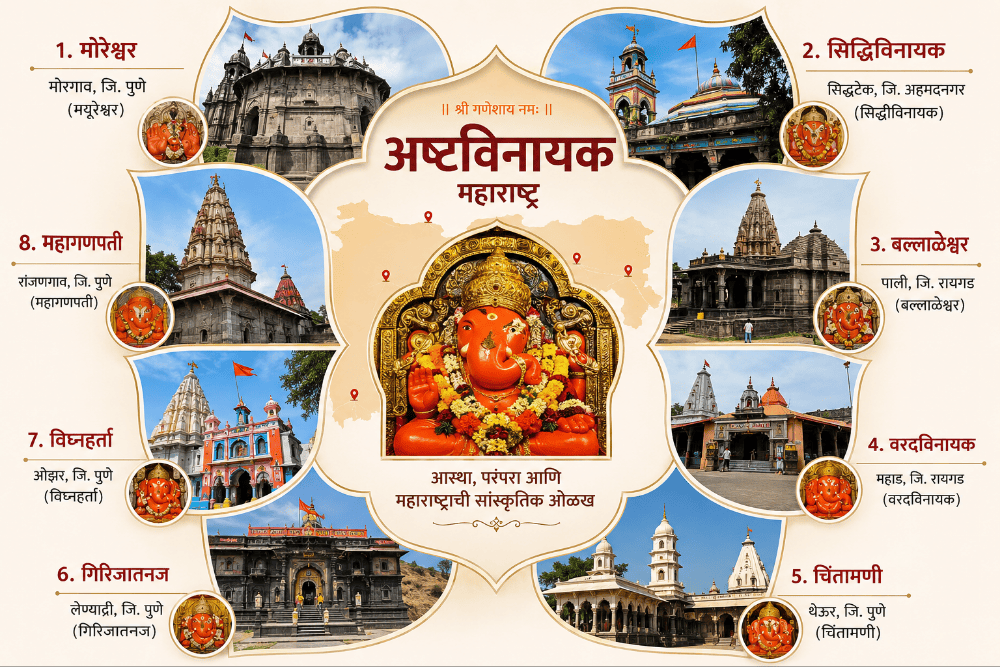
परंपरेनुसार, मोरगाव येथील मयुरेश्वर मंदिराला अष्टविनायक तीर्थयात्रेचा प्रारंभ आणि शेवटचा बिंदू मानले जाते. महाराष्ट्र पर्यटन विभाग मोरगावला या यात्रेच्या मार्गावरील सर्वात महत्त्वाचे तीर्थक्षेत्र म्हणून संबोधतो आणि त्याला पारंपरिक पहिला व शेवटचा थांबा म्हणून ओळखतो. हा क्रम केवळ एका प्रवास योजनेपेक्षा अधिक आहे. हे एक पारंपरिक पवित्र यात्राचक्र आहे, ज्यामध्ये भक्तगणांना गणेशाची विविध रूपे आणि पवित्र स्थळांची विविध रूपे अनुभवता येतात. याचा पारंपरिक क्रम असा आहे: मयुरेश्वर – मोरगाव, सिद्धिविनायक – सिद्धटेक, बल्लाळेश्वर – पाली, वरदविनायक – महाड, चिंतामणी – थेऊर, गिरिजात्मज – लेण्याद्री, विघ्नेश्वर – ओझर आणि महागणपती – रांजणगाव
१. मयुरेश्वर गणपती, मोरगाव
पुणे जिल्ह्यातील मोरगाव हे अष्टविनायक यात्रेचे पारंपरिक प्रारंभ आणि समाप्तीचे ठिकाण मानले जाते. येथील प्रमुख देवता मयुरेश्वर किंवा मयुरेश्वर गणपती आहे. हे नाव ‘मयूर’ या संस्कृत शब्दाशी संबंधित आहे, ज्याचा अर्थ मोर असा होतो. प्रचलित आख्यायिकेनुसार, गणेश मयूरेश्वर रूपात प्रकट झाला आणि मोरावर स्वार होऊन त्याने सिंधू राक्षसाचा पराभव केला. ही आख्यायिका या मंदिराला एक विशिष्ट ओळख देते.
हे मंदिर प्रामुख्याने काळ्या बेसॉल्ट दगडाने बांधलेले असून ते तटबंदीसारखे दिसते. त्याचे स्थापत्य वैशिष्ट्य दख्खनमधील मंदिर परंपरांच्या विकासाचे प्रतिबिंब दर्शवते. एक विशेष लक्षवेधी वैशिष्ट्य म्हणजे मंदिर परिसरात नंदीच्या प्रतिमेची उपस्थिती, जी प्रामुख्याने गणेशाला समर्पित असलेल्या देवस्थानासाठी एक असामान्य गोष्ट आहे. महाराष्ट्र पर्यटन विभाग मोरगावला गणपत्य परंपरेचे आध्यात्मिक केंद्र आणि तीर्थयात्रेचा पहिला व शेवटचा थांबा म्हणून ओळखतो.त्यामुळे मोरगाव केवळ एक पूजास्थळ म्हणूनच नव्हे, तर एक सांस्कृतिक भूदृश्य म्हणूनही महत्त्वाचे आहे, जिथे गावांची वस्ती, मंदिरांची वास्तुकला, धार्मिक विधी आणि तीर्थयात्रा एकमेकांशी घनिष्ठपणे जोडलेले आहेत.
२. सिद्धिविनायक गणपती, सिद्धटेक
दुसरे देवस्थान सध्याच्या अहिल्यानगर जिल्ह्यातील भीमा नदीच्या काठावर वसलेल्या सिद्धटेक येथील सिद्धिविनायक मंदिराचे आहे. या पवित्र ठिकाणी भगवान विष्णूंनी आध्यात्मिक शक्ती किंवा सिद्धी प्राप्त केली, या श्रद्धेशी हे मंदिर संबंधित आहे. येथील देवता विशेषतः वैशिष्ट्यपूर्ण आहे कारण पारंपरिकरित्या तिची सोंड उजवीकडे वळलेली दाखवली जाते. मंदिराशी संबंधित धार्मिक विधींच्या परंपरेत अशा दृष्टिकोनाला विशेष महत्त्व दिले जाते.
सिद्धटेक येथे एक महत्त्वाची तीर्थयात्रा प्रथा देखील आहे: भक्त पारंपारिकपणे…त्या पवित्र स्थळाशी संबंधित असलेल्या टेकडीची प्रदक्षिणा करतात. भीमा नदी आणि टेकडीचा परिसर या मंदिराला एक वैशिष्ट्यपूर्ण धार्मिक भौगोलिक स्वरूप प्रदान करतो. सध्याच्या मंदिराचा काळानुसार पुनर्बांधणी आणि विस्तार करण्यात आला आहे. महाराष्ट्र पर्यटन विभाग या मंदिराच्या नंतरच्या विकासाचे श्रेय अहिल्याबाई होळकर यांच्या आश्रयाला देते; ज्यांनी भारतभर अनेक ठिकाणी मंदिरे उभारण्याचे आणि जीर्णोद्धाराचे कार्य केले होते.
३. बल्लाळेश्वर गणपती, पाली
तिसरे तीर्थक्षेत्र रायगड जिल्ह्यातील पाली येथील ‘बल्लाळेश्वर’ हे आहे. अष्टविनायक मंदिरांमध्ये हे मंदिर अद्वितीय आहे कारण या देवतेचे नाव ‘बल्लाळ’ या भक्ताच्या नावावरून ठेवण्यात आले आहे. प्रचलित आख्यायिकेनुसार, बल्लाळ हा अत्यंत श्रद्धाळू बालक होता आणि त्याच्या गणेशभक्तीमुळे त्याचे वडील संतापले होते. अनेक हालअपेष्टा सहन करूनही बल्लाळ गणेशाच्या भक्तीवर ठाम राहिला. त्याच्या भक्तीवर प्रसन्न होऊन गणेशाने त्याला दर्शन दिले आणि वरदान दिले. त्यानंतर ही देवता ‘बल्लाळेश्वर’ म्हणून ओळखली जाऊ लागली.
हे मंदिर पौराणिक कथा आणि सामाजिक मूल्ये यांच्यातील घनिष्ठ संबंध दर्शवते. ही कथा भक्ती, चिकाटी आणि श्रद्धेचे महत्त्व अधोरेखित करते, ज्यामुळे हे मंदिर कुटुंबे आणि भक्तांसाठी विशेष अर्थपूर्ण ठरते. कोकण आणि रायगड प्रदेशातील ऐतिहासिक भूभागातील पालीचे स्थान याच्या महत्त्वामध्ये आणखी एक भर घालते. त्यामुळे, बल्लाळेश्वरची तीर्थयात्रा करतानाच या भागातील किल्ले, नैसर्गिक स्थळे आणि इतर ऐतिहासिक ठिकाणांनाही भेट देता येते.
४. वरदविनायक गणपती, महाड
चौथे तीर्थक्षेत्र रायगड जिल्ह्यातील महाड येथील ‘वरदविनायक’ हे आहे. ‘वरद’ या शब्दाचा अर्थ ‘वरदान देणारा’ असा होतो. त्यामुळे, हे मंदिर वरदान देणारे आणि भक्तांच्या इच्छा पूर्ण करणारे गणेश रूप म्हणून ओळखले जाते. काही मोठ्या तीर्थक्षेत्रांच्या तुलनेत या मंदिराचे स्वरूप अधिक साधे आणि भाविकांशी जवळीक साधणारे आहे. तरीही, याचे धार्मिक महत्त्व अनन्यसाधारण आहे कारण महाड हे पारंपरिक अष्टविनायक यात्रेचा एक अविभाज्य भाग आहे.
या मंदिराचे स्थान महाराष्ट्राच्या धार्मिक भूगोलाचे एक महत्त्वाचे वैशिष्ट्य देखील अधोरेखित करते: प्रमुख तीर्थक्षेत्रे नेहमीच मोठ्या शहरांमध्ये असतात असे नाही. त्यातील अनेक मंदिरे गावे आणि लहान वस्त्यांमध्ये वसलेली असतात, जिथे मंदिर हे सामुदायिक जीवनाचा एक अविभाज्य भाग असते.
५. चिंतामणी गणपती, थेऊर
पाचवे तीर्थक्षेत्र म्हणजे पुण्याजवळील थेऊर येथील ‘चिंतामणी’ मंदिर. ‘चिंतामणी’ हे नाव एका पौराणिक रत्नाशी संबंधित आहे, जे इच्छापूर्ती आणि चिंता निवारण करणारे मानले जाते. पेशव्यांच्या इतिहासात या मंदिराला विशेष महत्त्व आहे. मराठा काळात थेऊरचे एक महत्त्वाचे धार्मिक केंद्र म्हणून विकास झाला आणि या मंदिराला पेशव्यांचा आश्रय लाभला.
थेऊरचा पवित्र परिसर हा मुळा-मुठा नदी प्रणाली आणि मंदिराभोवती वसलेल्या ऐतिहासिक वस्तीशीही जोडलेला आहे. धार्मिक संस्था कशा प्रकारे राजकीय आश्रय, सांस्कृतिक उपक्रम आणि वस्तीच्या विकासाची महत्त्वाची केंद्रे बनू शकतात, याचे उत्तम उदाहरण हे तीर्थक्षेत्र देते. वारसा पर्यटनाच्या दृष्टीने, अठराव्या शतकातील महाराष्ट्राचा राजकीय-सांस्कृतिक इतिहास आणि गणेश उपासना यांच्यातील परस्परसंबंध जाणून घेण्याची संधी थेऊरमध्ये मिळते.
६. गिरिजात्मज गणपती, लेण्याद्री
अष्टविनायकांपैकी लेण्याद्री हे ठिकाण पुरातत्वीय दृष्टिकोनातून कदाचित सर्वात आकर्षक आहे. पुणे जिल्ह्यातील जुन्नर भागात असलेल्या एका प्राचीन लेण्यांच्या समूहामध्ये (खडक-कोरीव गुहा) गिरिजात्मज गणपतीचे मंदिर वसलेले आहे. महाराष्ट्र पर्यटन विभागाने या गुहांचा संबंध मूळच्या बौद्ध भिक्षूंच्या परंपरेशी जोडला असून, हा लेण्यांचा समूह साधारणपणे इसवी सनाच्या सुरुवातीच्या शतकांमधील असल्याचे मानले जाते. त्यानंतरच्या काळात या पवित्र परिसरात गणपतीच्या मंदिराचा समावेश करण्यात आला.
🔗 Girijatmaj Lenyadri Location
यामुळे लेण्याद्री हे पवित्र परिसरांचे रूपांतर आणि सातत्य यांचे एक असाधारण उदाहरण ठरते. हे मंदिर देवी पार्वती (किंवा गिरिजा) यांच्या आख्यायिकेशी जोडलेले आहे; असे मानले जाते की गणपतीला पुत्र म्हणून प्राप्त करण्यासाठी त्यांनी येथे कठोर तपश्चर्या केली होती. म्हणूनच येथे गणपतीची ‘गिरिजात्मज’ (गिरिजेचा पुत्र) म्हणून पूजा केली जाते.
मंदिरापर्यंत पोहोचण्यासाठी पर्यटकांना सुमारे ३०७ पायऱ्या चढाव्या लागतात. ही चढण स्वतःच तीर्थयात्रेच्या अनुभवाचा एक भाग बनली आहे. टेकडीवरून पर्यटक जुन्नर परिसराचे विहंगम दृश्य पाहू शकतात. तथापि, पुरातत्वीय दृष्टिकोनातून लेण्याद्रीच्या जतनासाठी विशेष काळजी घेणे आवश्यक आहे. हे स्थळ केवळ एक हिंदू मंदिर नाही, तर तो एका प्राचीन लेण्यांच्या वारसा संकुलाचा भाग आहे. त्यामुळे जतन करताना खडकाचा पृष्ठभाग, प्राचीन वास्तुकलेची वैशिष्ट्ये, जलनिस्सारण व्यवस्था, पर्यटकांची गर्दी आणि जिवंत उपासना व पुरातत्वीय जतन यांच्यातील परस्परसंबंध या गोष्टींचा विचार करणे गरजेचे आहे.
७. विघ्नेश्वर गणपती, ओझर
सातवे तीर्थक्षेत्र म्हणजे पुणे जिल्ह्यातील ओझर येथील ‘विघ्नेश्वर’ मंदिर. या नावाचा अर्थ ‘अडथळे दूर करणारे देव’ असा होतो. हे मंदिर त्याच्या वास्तुशैलीसाठी – विशेषतः प्रवेशद्वार, अंगण आणि पारंपरिक सजावटीच्या घटकांसाठी – ओळखले जाते. पिढ्यानपिढ्या चाललेल्या धार्मिक कार्यांमुळे आणि मिळालेल्या राजाश्रयामुळे या मंदिर परिसराचा विकास झाला आहे.
जुन्नर परिसरातील लेण्याद्री आणि इतर ऐतिहासिक स्थळांच्या सान्निध्यामुळे ओझरचे महत्त्व विशेष आहे. त्यामुळे, लेण्याद्री आणि ओझरची एकत्रित तीर्थयात्रा धार्मिक पर्यटनाला पुरातत्वीय पर्यटनाशी जोडण्याची एक उत्तम संधी उपलब्ध करून देते. जुन्नरच्या आसपासच्या भागात अनेक प्राचीन लेणी, शिलालेख, किल्ले आणि ऐतिहासिक वस्त्या आहेत. परिणामी, अष्टविनायक यात्रेचा मार्ग केवळ एक धार्मिक मार्ग न मानता, त्याकडे एक व्यापक सांस्कृतिक वारसा मार्ग (कॉरिडॉर) म्हणून पाहिले जाऊ शकते.
८. महागणपती, रांजणगाव
पारंपरिक क्रमवारीतील शेवटचे तीर्थक्षेत्र म्हणजे पुण्यापासून सुमारे ५० किलोमीटर अंतरावर असलेले रांजणगाव येथील महागणपतीचे मंदिर. महागणपती हे गणेशाचे भव्य किंवा सर्वोच्च रूप मानले जाते. या मंदिराचा या प्रदेशाशी दीर्घकालीन ऐतिहासिक संबंध आहे आणि विविध कालखंडांत याला राजाश्रय व जीर्णोद्धाराचा लाभ मिळाला आहे.
🔗 Mahaganapati Ranjangaon Location
सध्याच्या मंदिर परिसरात बांधकामाच्या आणि बदलांच्या विविध टप्प्यांचे दर्शन घडवणारी वास्तुशिल्पीय वैशिष्ट्ये दिसून येतात. माधवराव पेशवे, मल्हारराव होळकर आणि महादजी शिंदे यांसारख्या ऐतिहासिक व्यक्तींशी या मंदिराच्या विकासाचा संबंध जोडणाऱ्या परंपरांचा उल्लेख महाराष्ट्र पर्यटन विभागाने केला आहे. बदलती वाहतूक व्यवस्था आणि शहरीकरण यांचा धार्मिक केंद्रांशी कसा संबंध आला, याचे रांजणगाव हे एक महत्त्वाचे उदाहरण आहे. पुणे आणि प्रमुख महामार्गांच्या सान्निध्यामुळे येथे पोहोचणे सोपे झाले असले, तरी त्याच वेळी वाहतूक व्यवस्थापन, गर्दीचे नियंत्रण आणि ऐतिहासिक मंदिर परिसराचे जतन यांसारखी आव्हानेही निर्माण झाली आहेत.
अष्टविनायक आणि वारसा पर्यटन
अष्टविनायक यात्रेच्या मार्गामध्ये शाश्वत सांस्कृतिक पर्यटनाची प्रचंड क्षमता आहे. या आठही मंदिरांना भेट देणारा भाविक विविध प्रकारच्या भूप्रदेशांचा अनुभव घेऊ शकतो: यात पुण्याचे ग्रामीण मैदानी प्रदेश, भीमा नदीचा परिसर, कोकणातील निसर्गदृश्ये, ऐतिहासिक वस्त्या, तसेच डोंगररांगा आणि खडकात कोरलेल्या लेण्यांचा समावेश आहे. त्यामुळे, या यात्रेच्या मार्गाला आसपासच्या ऐतिहासिक वारसा स्थळांशी जोडता येऊ शकते.
उदाहरणार्थ, लेण्याद्री-ओझर-जुन्नर हा पट्टा अष्टविनायक यात्रेला बौद्ध लेण्यांशी आणि शिवनेरी किल्ल्याशी जोडू शकतो. महाराष्ट्र पर्यटन विभाग जुन्नरमधील लेण्यांच्या क्षेत्राचे पुरातत्वीय महत्त्व आणि लेण्याद्रीपासून शिवनेरी किल्ल्याचे जवळचे अंतर या गोष्टींवर विशेष भर देतो. त्याचप्रमाणे, मोरगाव-थेऊर-रंजगाव हा पट्टा धार्मिक स्थळांना मराठा आणि पेशवेकालीन इतिहासाशी जोडणारा ‘वारसा मार्ग’ म्हणून विकसित केला जाऊ शकतो. अशा दृष्टिकोनामुळे पर्यटकांचा मुक्काम वाढू शकतो, स्थानिक समुदायांना फायदा होऊ शकतो आणि केवळ अल्पकाळासाठी दर्शन घेण्यासाठी हजारो भाविक एकाच वेळी मंदिरात आल्याने निर्माण होणारा ताण कमी होऊ शकतो.
समुदायाचा सहभाग: शाश्वत संवर्धनाची गुरुकिल्ली
अष्टविनायक मंदिरांच्या परिसरात राहणारे लोक केवळ पर्यटकांना सेवा पुरवणारे नसून, ते जिवंत परंपरांचे रक्षक आहेत. स्थानिक पुजारी, मंदिर विश्वस्त मंडळे, कारागीर, दुकानदार, वाहतूकदार, मार्गदर्शक (गाईड्स), शेतकरी, महिला बचत गट आणि तरुण पिढी या सर्वांची वारसा व्यवस्थापनात भूमिका असते.
त्यामुळे, संवर्धन प्रकल्पांमध्ये स्थानिक लोकांचा सल्ला आणि सहभाग समाविष्ट केला पाहिजे. पारंपरिक कारागीर स्थानिक पातळीवर उपलब्ध साहित्य आणि तंत्रांचा वापर करून दुरुस्तीच्या कामात योगदान देऊ शकतात. स्थानिक मार्गदर्शक मौखिक परंपरा आणि ऐतिहासिक कथांची माहिती देऊ शकतात. समुदाय गट स्वच्छता मोहिमा आणि पर्यटक व्यवस्थापनात सहभागी होऊ शकतात. पर्यटनातून मिळणाऱ्या उत्पन्नाचा स्थानिक पातळीवर प्रत्यक्ष लाभही झाला पाहिजे. जेव्हा समुदायांना वारसा संवर्धन हे आर्थिक आणि सांस्कृतिकदृष्ट्या मौल्यवान वाटते, तेव्हा त्याचे दीर्घकालीन संरक्षण अधिक शाश्वत बनते.
सारांश
महाराष्ट्रातील अष्टविनायक मंदिरे ही केवळ गणपतीची आठ प्रसिद्ध तीर्थक्षेत्रे नाहीत. ती मिळून एक असा सांस्कृतिक परिसर (cultural landscape) तयार करतात, ज्यामध्ये पौराणिक कथा, भक्ती, वास्तुकला, पुरातत्वशास्त्र, इतिहास, भूगोल आणि सामुदायिक परंपरा यांचा शतकानुशतके विकास होत गेला आहे. मोरगाव येथील मयुरेश्वराचे काळ्या पाषाणातील मंदिर असो किंवा लेण्याद्री येथील खडकात कोरलेले गिरिजत्मजाचे अद्वितीय मंदिर – प्रत्येक तीर्थक्षेत्र एक वैशिष्ट्यपूर्ण अनुभव देते. सिद्धटेक हे तीर्थक्षेत्र भीमा नदीच्या परिसराशी जोडलेले आहे; पाली आणि महाड ही ठिकाणे रायगड परिसराचा पवित्र वारसा दर्शवतात; तर थेऊर हे ठिकाण पेशव्यांच्या ऐतिहासिक विश्वाची आठवण करून देते. ओझर आणि रांजणगाव ही ठिकाणे पुणे परिसरातील मंदिर परंपरांची अखंडित जिवंतता दर्शवतात.
सरकारचे अलीकडील उपक्रम विशेष महत्त्वाचे आहेत, कारण ‘अष्टविनायक’ तीर्थक्षेत्रांच्या वाढत्या लोकप्रियतेसाठी वारशाचे पद्धतशीर व्यवस्थापन आवश्यक आहे, याची दखल त्यातून घेतली गेली आहे. ९२.१९ कोटी रुपयांची जीर्णोद्धार आणि विकास योजना, तसेच या कामात पुरातत्व विभागाचा सहभाग, हे धार्मिक स्मारकांचे जतन आणि भाविकांसाठीच्या सुविधांमध्ये सुधारणा करण्याच्या दिशेने टाकलेले एक महत्त्वपूर्ण पाऊल आहे. जर जतन, तीर्थयात्रा व्यवस्थापन, लोकसहभाग आणि शाश्वत पर्यटन यांचा प्रभावीपणे मेळ घातला गेला, तर अष्टविनायक तीर्थक्षेत्रांचा हा प्रवास मार्ग भारतातील ‘वारशाचे भान राखणाऱ्या धार्मिक पर्यटना’साठी एक आदर्श ठरू शकतो.
भाविकांसाठी अष्टविनायक यात्रा हा श्रद्धा आणि भक्तीचा प्रवास आहे. इतिहासकार आणि पुरातत्वशास्त्रज्ञांसाठी हा महाराष्ट्राच्या सांस्कृतिक भूतकाळातील विविध स्तरांचा शोध घेणारा प्रवास आहे. पर्यटकांसाठी ही मंदिरे, गावे, निसर्गदृश्ये आणि परंपरा जाणून घेण्याची संधी आहे. आणि भावी पिढ्यांसाठी हा एक असा वारसा आहे ज्याचे जतन विचारपूर्वक आणि जबाबदारीने होणे गरजेचे आहे. अशा प्रकारे, गणेशाची ही आठ पवित्र रूपे महाराष्ट्राचा भूतकाळ आणि वर्तमान यांना जोडण्याचे कार्य अविरतपणे करत आहेत.
Ashtavinayak in Maharashtra
Maharashtra is a land where religion, history, architecture, landscape and living traditions come together in remarkable ways. Among its many sacred pilgrimage traditions, the Ashtavinayak Yatra occupies a special place. The term Ashtavinayak literally means “eight Vinayakas,” referring to eight revered manifestations of Lord Ganesha located at different historic settlements of Maharashtra. Each temple has its own name, mythology, architectural character, ritual tradition and cultural landscape.
The eight shrines are Mayureshwar at Morgaon, Siddhivinayak at Siddhatek, Ballaleshwar at Pali, Varadvinayak at Mahad, Chintamani at Theur, Girijatmaj at Lenyadri, Vighneshwar at Ozar and Mahaganapati at Ranjangaon. These eight places form a sacred cultural network extending across the Pune, Raigad and Ahilyanagar regions of Maharashtra. Maharashtra’s official heritage and tourism sources continue to identify these eight temples as the Ashtavinayak pilgrimage circuit.
The importance of Ashtavinayak extends far beyond religious tourism. The temples preserve layers of architectural history, local traditions, pilgrimage practices, sacred geography, sculpture, historical patronage and intangible cultural heritage. Some shrines are associated with Peshwa-period patronage, while Lenyadri is especially significant because the Ganesha shrine is located within an ancient Buddhist rock-cut cave complex.
In recent years, the increasing number of pilgrims has created both opportunities and challenges. Improved roads, accommodation, sanitation and visitor facilities can make the pilgrimage easier, but uncontrolled construction, overcrowding, traffic, waste, inappropriate repairs and pressure on historic structures can threaten the authenticity of sacred heritage. Recognising these challenges, the Government of Maharashtra has initiated a substantial restoration and development programme for the Ashtavinayak temples. The current programme represents an important shift towards combining pilgrimage infrastructure with conservation of historic religious heritage.
The Cultural Significance of Ashtavinayak
Lord Ganesha occupies a central position in Maharashtra’s religious and cultural life. Worshipped as the remover of obstacles, the deity of wisdom and learning, and the god invoked before auspicious activities, Ganesha has a particularly strong presence in Maharashtrian society.The Ashtavinayak tradition gives this devotion a geographical dimension. Instead of being confined to one temple, pilgrimage connects eight sacred landscapes. The journey itself becomes an important part of the religious experience.
Traditionally, the Mayureshwar Temple at Morgaon is regarded as the beginning and ending point of the Ashtavinayak pilgrimage. Maharashtra Tourism describes Morgaon as the most significant shrine in the circuit and identifies it as the traditional first and final stop.This sequence is more than a travel itinerary. It represents a traditional sacred circuit in which devotees experience different manifestations of Ganesha and different forms of sacred landscapes.The conventional sequence is:Mayureshwar – Morgaon, Siddhivinayak – Siddhatek, Ballaleshwar – Pali, Varadvinayak – Mahad, Chintamani – Theur, Girijatmaj – Lenyadri, Vighneshwar – Ozar and Mahaganapati – Ranjangaon
1. Mayureshwar Ganapati, Morgaon
Morgaon, in Pune district, is traditionally regarded as the starting and concluding point of the Ashtavinayak pilgrimage. The principal deity is Mayureshwar, or Mayureshwar Ganapati.The name is associated with the Sanskrit word Mayura, meaning peacock. According to the popular legend, Ganesha manifested as Mayureshwar and defeated the demon Sindhu while riding a peacock. The legend contributes to the distinctive identity of the shrine.
The temple is built predominantly of black basalt and has a fortified appearance. Its architectural character reflects the development of temple traditions in the Deccan. A particularly interesting feature is the presence of a Nandi image in the temple complex, unusual for a shrine primarily dedicated to Ganesha. Maharashtra Tourism identifies Morgaon as the spiritual centre of the Ganapatya tradition and as the first and last stop of the pilgrimage.
Morgaon is therefore important not only as a place of worship but also as a cultural landscape in which village settlement, temple architecture, ritual practice and pilgrimage are closely interconnected.
2. Siddhivinayak Ganapati, Siddhatek
The second shrine is Siddhivinayak at Siddhatek, situated on the banks of the Bhima River in the present-day Ahilyanagar district.The temple is associated with the belief that Lord Vishnu attained spiritual power or siddhi at this sacred location. The deity is particularly distinctive because the trunk is traditionally shown turned towards the right. Such an orientation is considered especially significant in the ritual tradition surrounding the temple.
Siddhatek also has an important pilgrimage practice: devotees traditionally undertake a circumambulation of the hill associated with the shrine. The surrounding landscape of the Bhima River and the hill gives the temple a distinctive sacred geography.The present temple has undergone reconstruction and additions over time, and Maharashtra Tourism associates its later development with the patronage of Ahilyabai Holkar, whose temple-building and restoration activities extended across many parts of India.
3. Ballaleshwar Ganapati, Pali
The third shrine is Ballaleshwar at Pali, in Raigad district. It is unique among the Ashtavinayak temples because the deity is named after a devotee, Ballala.According to the popular legend, Ballala was a deeply devoted child whose worship of Ganesha angered his father. Despite suffering persecution, Ballala remained devoted to Ganesha. Pleased by his devotion, Ganesha appeared before him and granted his blessing. The deity subsequently became known as Ballaleshwar.
The temple illustrates the close relationship between mythology and social values. The story celebrates devotion, perseverance and faith, making the temple especially meaningful to families and devotees.Pali’s location in the historic landscape of the Konkan and Raigad region adds another dimension to its importance. A pilgrimage to Ballaleshwar can therefore be combined with visits to the region’s forts, natural landscapes and other historic sites.
4. Varadvinayak Ganapati, Mahad
The fourth shrine is Varadvinayak at Mahad, also in Raigad district.The word Varada refers to one who grants boons. The temple is therefore associated with Ganesha as the bestower of blessings and fulfilment of devotees’ wishes.The shrine has a relatively intimate character compared with some of the larger pilgrimage centres. Its sacred importance is nevertheless considerable because Mahad forms an essential component of the traditional Ashtavinayak circuit.
The location also illustrates an important characteristic of Maharashtra’s sacred geography: major pilgrimage centres are not always situated in large cities. Many are embedded within villages and small settlements where the temple continues to be an integral part of community life.
5. Chintamani Ganapati, Theur
The fifth shrine is Chintamani at Theur, near Pune. The name Chintamani refers to a legendary jewel associated with the fulfilment of desires and the removal of worries.The temple is especially important in the history of the Peshwas. Theur developed as an important religious centre during the Maratha period, and the temple received patronage from the Peshwa establishment.
The sacred landscape of Theur is also associated with the Mula-Mutha river system and the historic settlement around the temple. The shrine demonstrates how religious institutions could become important centres of political patronage, cultural activity and settlement development.For heritage tourism, Theur offers an opportunity to explore the relationship between Ganesha worship and the political-cultural history of eighteenth-century Maharashtra.
6. Girijatmaj Ganapati, Lenyadri
Among all eight shrines, Lenyadri is perhaps the most fascinating from an archaeological perspective.The temple of Girijatmaj is located inside an ancient rock-cut cave complex in the Junnar region of Pune district. Maharashtra Tourism identifies the caves as originally associated with a Buddhist monastic tradition and dates the rock-cut complex broadly to the early centuries of the Common Era. The Ganesha shrine was subsequently incorporated into this sacred landscape.
This makes Lenyadri an extraordinary example of the transformation and continuity of sacred landscapes.The temple is traditionally associated with the legend of Goddess Parvati, or Girija, who performed penance to obtain Ganesha as her son. Hence Ganesha is worshipped here as Girijatmaj, the son of Girija.
Visitors have to climb approximately 307 steps to reach the shrine. The climb itself has become part of the pilgrimage experience. From the hill, visitors can enjoy extensive views of the Junnar landscape.From an archaeological perspective, however, Lenyadri requires particularly careful conservation. The site is not merely a Hindu temple; it forms part of an ancient rock-cut heritage complex. Conservation therefore has to consider rock surfaces, ancient architectural features, drainage, visitor pressure and the relationship between living worship and archaeological preservation.
7. Vighneshwar Ganapati, Ozar
The seventh shrine is Vighneshwar at Ozar, in Pune district. The name means the Lord who removes obstacles.The temple is known for its architectural composition, including its entrance, courtyard and traditional decorative elements. The temple complex has developed over generations of religious activity and patronage.
Ozar is particularly significant because of its proximity to Lenyadri and other heritage attractions in the Junnar region. A combined Lenyadri-Ozar pilgrimage therefore provides an excellent opportunity to connect religious tourism with archaeological tourism.The region around Junnar contains numerous ancient caves, inscriptions, forts and historic settlements. As a result, the Ashtavinayak circuit can be interpreted not simply as a religious route but as a wider cultural heritage corridor.
8. Mahaganapati, Ranjangaon
The final shrine in the traditional sequence is Mahaganapati at Ranjangaon, located about 50 kilometres from Pune.Mahaganapati represents Ganesha in his great or supreme form. The temple has a long historical association with the region and has received patronage and renovation over different periods.
The present temple complex contains architectural features reflecting different phases of construction and modification. Maharashtra Tourism notes traditions connecting the temple’s development with historical figures including Madhavrao Peshwa, Malharrao Holkar and Mahadji Shinde.Ranjangaon is also an important example of how religious centres have interacted with changing transport networks and urbanisation. Its proximity to Pune and major highways has increased accessibility but has simultaneously created challenges of traffic management, crowd control and protection of the historic temple environment.
Ashtavinayak and Heritage Tourism
The Ashtavinayak circuit has enormous potential for sustainable cultural tourism.A pilgrim visiting all eight temples can experience several different landscapes: the rural plains of Pune, the Bhima River region, the Konkan landscape, historic settlements, hills and rock-cut caves.The circuit can therefore be integrated with nearby heritage destinations.
For example, the Lenyadri-Ozar-Junnar sector can connect Ashtavinayak pilgrimage with Buddhist caves and Shivneri Fort. Maharashtra Tourism specifically highlights the archaeological importance of the Junnar cave region and the proximity of Shivneri Fort to Lenyadri.Similarly, the Morgaon-Theur-Ranjangaon sector can be developed as a heritage route connecting religious sites with Maratha and Peshwa history.Such an approach can extend visitors’ stays, benefit local communities and reduce the pressure created when thousands of pilgrims arrive at a temple only for a short darshan.
Community Participation: The Key to Sustainable Conservation
The people living around the Ashtavinayak temples are not simply service providers for tourists. They are custodians of living traditions.Local priests, temple trusts, artisans, shopkeepers, transport operators, guides, farmers, women’s groups and young people all have a role in heritage management.
Conservation projects should therefore include local consultation.Traditional craftsmen can contribute to repairs using locally appropriate materials and techniques. Local guides can communicate oral traditions and historical narratives. Community groups can participate in cleanliness campaigns and visitor management.Tourism revenue should also generate tangible local benefits. When communities see heritage conservation as economically and culturally valuable, long-term protection becomes much more sustainable.
Summary
The Ashtavinayak temples of Maharashtra are much more than eight famous Ganesha shrines. Together they form a cultural landscape in which mythology, devotion, architecture, archaeology, history, geography and community traditions have evolved over centuries.From the black-stone temple of Mayureshwar at Morgaon to the extraordinary rock-cut sanctuary of Girijatmaj at Lenyadri, each shrine offers a distinctive experience. Siddhatek connects pilgrimage with the Bhima River landscape; Pali and Mahad represent the sacred heritage of the Raigad region; Theur recalls the historical world of the Peshwas; Ozar and Ranjangaon demonstrate the continuing vitality of temple traditions in the Pune region.
The recent government initiatives are particularly significant because they recognise that the increasing popularity of the Ashtavinayak circuit requires systematic heritage management. The ₹92.19-crore restoration and development framework, together with the Archaeology Department’s involvement in restoration, represents an important move towards protecting these important religious monuments while improving facilities for pilgrims.If conservation, pilgrimage management, community participation and sustainable tourism are integrated effectively, the Ashtavinayak circuit can become a model for heritage-sensitive religious tourism in India.
For devotees, the Ashtavinayak Yatra remains a journey of faith and devotion. For historians and archaeologists, it is a journey through layers of Maharashtra’s cultural past. For tourists, it offers an opportunity to discover temples, villages, landscapes and traditions. And for future generations, it is a heritage legacy that deserves thoughtful and responsible protection.The eight sacred forms of Ganesha thus continue to unite Maharashtra’s past and present.


Leave a comment