
Sarnath, located about 10 km from the holy city of Varanasi in Uttar Pradesh, is one of the most revered Buddhist pilgrimage destinations in the world. It was here that Gautama Buddha delivered his first sermon after attaining enlightenment at Bodh Gaya, marking the beginning of Buddhism as a religion. Known in ancient times as Isipatana or Mrigadava (Deer Park), Sarnath attracts millions of pilgrims, scholars, historians, and tourists every year.
Apart from its immense religious significance, Sarnath is also an archaeological treasure. The site contains magnificent stupas, monasteries, temples, pillars, and sculptures dating from the Mauryan, Kushan, Gupta, and medieval periods. The famous Lion Capital of Ashoka, India’s National Emblem, was discovered here, making Sarnath an important symbol of India’s cultural heritage.
The Meaning and Origin of Sarnath
The name Sarnath is believed to have originated from “Saranganath,” meaning Lord of the Deer. According to Buddhist legends, the Bodhisattva, in one of his previous births, sacrificed himself to save a deer, giving the area its sacred identity.Another ancient name, Mrigadava (Deer Park), refers to the forest where deer roamed freely and where Buddha chose to teach his first disciples.
Historical Importance
Sarnath occupies a unique place in Buddhist history because it witnessed the first turning of the Wheel of Dharma (Dharmachakra Pravartana).After achieving enlightenment under the Bodhi Tree at Bodh Gaya around the 6th century BCE, Buddha traveled to Sarnath to meet the five ascetics who had earlier practiced with him. Here, he preached the Four Noble Truths and the Eightfold Path, laying the foundation of Buddhist philosophy.These five disciples became the first members of the Buddhist Sangha, making Sarnath the birthplace of the Buddhist monastic order.
Emperor Ashoka’s Contribution
During the 3rd century BCE, Emperor Ashoka embraced Buddhism after the Kalinga War and became its greatest patron.At Sarnath he constructed:The magnificent Ashokan Pillar, Several monasteries, Stupas and Prayer halls. The Lion Capital atop the Ashokan Pillar features four majestic lions standing back-to-back and represents courage, strength, and peace. Today it serves as the National Emblem of India, while the Ashoka Chakra from the pillar adorns the Indian national flag.
Major Attractions in Sarnath
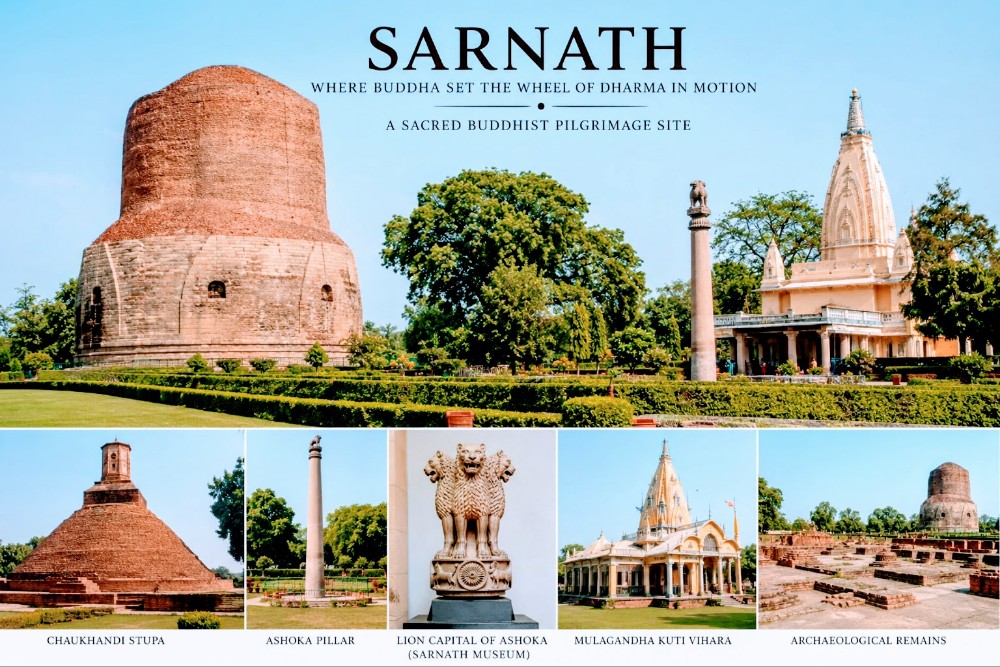
1. Dhamek Stupa-The Dhamek Stupa is the most prominent monument in Sarnath.Standing nearly 43.6 metres high with a diameter of about 28 metres, it marks the location where Buddha delivered his first sermon.Its lower portion displays beautiful Gupta-period stone carvings featuring floral motifs, geometric patterns, and symbolic Buddhist designs.Pilgrims from around the world gather here to meditate and offer prayers.
2. Chaukhandi Stupa-The Chaukhandi Stupa commemorates the meeting between Buddha and his first five disciples before the first sermon.Originally built during the Gupta period, it was later modified by the Mughals with the addition of an octagonal tower.It stands on a raised platform and offers visitors panoramic views of the surrounding landscape.
3. Ashoka Pillar-Although the original pillar lies broken, its polished sandstone shaft still demonstrates the extraordinary craftsmanship of the Mauryan period.The Lion Capital discovered here is preserved in the Sarnath Archaeological Museum.The pillar symbolizes justice, peace, and the spread of Buddhism.
4. Mulagandha Kuti Vihara-Built by the Mahabodhi Society in 1931, the Mulagandha Kuti Vihara is among the most beautiful modern Buddhist temples in India.Its highlights include:Stunning frescoes depicting Buddha’s life,Peaceful meditation hall,Sacred relics of Buddha and Daily chanting ceremoniesThe temple gardens are especially attractive during the flowering season.
5. Archaeological Museum– The Sarnath Archaeological Museum is India’s oldest site museum.It houses priceless artefacts including:
- Lion Capital of Ashoka
- Buddha sculptures
- Bodhisattva images
- Gupta-era masterpieces
- Ancient inscriptions
- Stone railings
- Terracotta objects
The museum provides a fascinating insight into the artistic evolution of Buddhist India.
6. Deer Park-The Deer Park recreates the atmosphere of the ancient Mrigadava.Visitors often enjoy walking through its peaceful surroundings while observing deer roaming freely, recalling the site’s ancient legends.
7. International Buddhist Temples-Sarnath is home to beautifully designed monasteries established by Buddhist communities from different countries, including:
- Thailand
- Japan
- Myanmar
- Sri Lanka
- Tibet
- South Korea
- Vietnam
Each temple reflects its country’s architectural traditions while promoting global Buddhist harmony.
Archaeological Discoveries
Excavations conducted by the Archaeological Survey of India have revealed:Ancient monasteries,Residential quarters for monks, Meditation halls,Prayer platforms,Sculptures, Stone inscriptions,Coins,Pottery and Gupta-period temples.These discoveries indicate that Sarnath flourished as a major educational and religious centre for over a thousand years.
UNESCO Significance
Sarnath is currently inscribed on the UNESCO World Heritage List.It is internationally recognised as one of Buddhism’s holiest pilgrimage centres and has immense archaeological and cultural value.Its monuments continue to be protected by the Archaeological Survey of India.
How to Reach Sarnath
By Air-The nearest airport is Lal Bahadur Shastri International Airport, Varanasi, about 25 km away.By Rail- Sarnath has a railway station connected to Varanasi. Varanasi Junction is the major rail hub nearby. By Road-Excellent road connectivity links Sarnath with Varanasi, Prayagraj, Lucknow, Bodh Gaya, and other cities. Auto-rickshaws,taxis, buses, and app-based cabs are readily available.
Nearby Attractions
Visitors often combine Sarnath with:Varanasi Ghats,Kashi Vishwanath Temple,Ramnagar Fort,Bharat Kala Bhavan,Banaras Hindu University and Chunar Fort.Together, these destinations offer an enriching blend of spirituality, history, architecture, and culture.
Why Sarnath Matters Today
Sarnath represents the universal values of compassion, peace, tolerance, and wisdom taught by Buddha over 2,500 years ago. It is not merely an archaeological site but a living centre of faith where people from diverse cultures come together in search of spiritual inspiration.The monuments of Sarnath continue to inspire historians, archaeologists, artists, pilgrims, and travellers alike. The discovery of the Lion Capital further elevated its place in India’s national identity, linking ancient heritage with the modern Republic of India.
Summary
Sarnath is one of India’s most treasured heritage destinations, combining history, spirituality, archaeology, and art in a single sacred landscape. From the majestic Dhamek Stupa and the Ashokan Pillar to the world-famous Lion Capital and serene monasteries, every monument tells the story of Buddhism’s remarkable journey across Asia.
Whether you are a pilgrim seeking spiritual enlightenment, a history enthusiast exploring India’s glorious past, or a traveller fascinated by cultural heritage, Sarnath offers an unforgettable experience. A visit to this sacred Deer Park is a journey into the origins of one of the world’s greatest philosophies and a reminder of the timeless message of peace and compassion.
सारनाथ: जागतिक वारसा स्थळ
उत्तर प्रदेशातील वाराणसी या पवित्र शहरापासून सुमारे १० किमी अंतरावर असलेले सारनाथ हे जगातील अत्यंत आदरणीय अशा बौद्ध तीर्थक्षेत्रांपैकी एक आहे. बोधगया येथे ज्ञानप्राप्ती झाल्यानंतर गौतम बुद्धांनी आपला पहिला उपदेश याच ठिकाणी दिला होता; या घटनेनेच एका धर्माच्या रूपात बौद्ध धर्माची सुरुवात झाली. प्राचीन काळी ‘ऋषिपतन’ (Isipatana) किंवा ‘मृगदाव’ (Deer Park – हरिणांचे उद्यान) म्हणून ओळखले जाणारे सारनाथ दरवर्षी लाखो भाविक, अभ्यासक, इतिहासकार आणि पर्यटकांना आकर्षित करते.
अफाट धार्मिक महत्त्वाव्यतिरिक्त, सारनाथ हे एक पुरातत्वीय अवशेषांचे ठिकाणही आहे. या ठिकाणी मौर्य, कुषाण, गुप्त आणि मध्ययुगीन काळातील भव्य स्तूप, विहार, मंदिरे, स्तंभ आणि शिल्पे पाहायला मिळतात. भारताचे राष्ट्रीय चिन्ह असलेला प्रसिद्ध ‘अशोकस्तंभाचा सिंह-शीर्ष भाग’ (Lion Capital of Ashoka) याच ठिकाणी सापडला होता, ज्यामुळे सारनाथ हे भारताच्या सांस्कृतिक वारशाचे एक महत्त्वाचे प्रतीक बनले आहे.
सारनाथचा अर्थ आणि उगम
‘सारनाथ’ हे नाव ‘सारंगनाथ’ (Saranganath) या शब्दापासून आले असावे असे मानले जाते, ज्याचा अर्थ ‘हरिणांचा स्वामी’ (Lord of the Deer) असा होतो. बौद्ध दंतकथांनुसार, बोधिसत्त्वांनी आपल्या एका पूर्वजन्मात एका हरिणाचे प्राण वाचवण्यासाठी स्वतःचे बलिदान दिले होते; या घटनेमुळे या परिसराला पवित्र ओळख मिळाली. ‘मृगदाव’ (हरिणांचे उद्यान) हे आणखी एक प्राचीन नाव त्या जंगलाचा संदर्भ देते जिथे हरिणे मुक्तपणे वावरत असत आणि जिथे बुद्धांनी आपल्या पहिल्या शिष्यांना उपदेश देण्याचे ठरवले होते.
ऐतिहासिक महत्त्व
बौद्ध इतिहासात सारनाथचे स्थान अद्वितीय आहे कारण येथेच ‘धम्मचक्र प्रवर्तन’ (धर्माच्या चक्राचा पहिला प्रसार) घडले. इसवी सन पूर्व सहाव्या शतकाच्या सुमारास बोधगया येथील बोधी वृक्षाखाली ज्ञानप्राप्ती केल्यानंतर, बुद्ध सारनाथला गेले. तिथे ते त्या पाच तपस्व्यांना भेटले ज्यांनी पूर्वी त्यांच्यासोबत साधना केली होती. येथे त्यांनी ‘चार आर्य सत्य’ (Four Noble Truths) आणि ‘अष्टांगिक मार्ग’ (Eightfold Path) यांचा उपदेश दिला आणि बौद्ध तत्त्वज्ञानाचा पाया घातला. हे पाच शिष्य बौद्ध संघाचे पहिले सदस्य बनले, ज्यामुळे सारनाथ हे बौद्ध भिक्षूंच्या संघाचे (monastic order) जन्मस्थान ठरले.
सम्राट अशोकाचे योगदान
इसवी सन पूर्व तिसऱ्या शतकात, कलिंग युद्धानंतर सम्राट अशोकाने बौद्ध धर्माचा स्वीकार केला आणि तो या धर्माचा सर्वात मोठा संरक्षक बनला. सारनाथमध्ये त्यांनी भव्य अशोकस्तंभ, अनेक विहार, स्तूप आणि प्रार्थनागृहे यांची उभारणी केली. अशोक स्तंभाच्या वरच्या भागावर चार भव्य सिंह एकमेकांकडे पाठ करून उभे आहेत; हे शिल्प धैर्य, सामर्थ्य आणि शांततेचे प्रतीक आहे. आज हे भारताचे ‘राष्ट्रीय बोधचिन्ह’ (National Emblem) म्हणून ओळखले जाते, तर याच स्तंभावरील ‘अशोक चक्र’ भारतीय राष्ट्रध्वजावर शोभून दिसते.
सारनाथमधील प्रमुख आकर्षणे
१. धमेख स्तूप – धमेख स्तूप हे सारनाथमधील सर्वात प्रमुख स्मारक आहे. सुमारे ४३.६ मीटर उंच आणि २८ मीटर व्यास असलेला हा स्तूप त्या जागेचे निदर्शक आहे जिथे बुद्धांनी आपला पहिला उपदेश दिला होता. याच्या खालच्या भागावर गुप्त काळातील सुंदर दगडी कोरीव काम पाहायला मिळते, ज्यामध्ये फुलांची नक्षी, भौमितिक आकार आणि बौद्ध धर्माशी संबंधित प्रतीकात्मक रचनांचा समावेश आहे. जगभरातून भाविक येथे ध्यानधारणा आणि प्रार्थना करण्यासाठी येतात.
२. चौखंडी स्तूप – चौखंडी स्तूप हा बुद्ध आणि त्यांचे पहिले पाच शिष्य यांच्यातील भेटीचे (पहिल्या उपदेशापूर्वीची भेट) स्मरण करून देतो. मूळतः गुप्त काळात बांधलेल्या या स्तूपामध्ये नंतर मुघल काळात अष्टकोनी मनोरा जोडून बदल करण्यात आले. हा स्तूप एका उंच चौथऱ्यावर उभा असून येथून पर्यटकांना परिसराचे विहंगम दृश्य दिसते.
३. अशोक स्तंभ – जरी मूळ स्तंभ भग्न अवस्थेत असला, तरी त्याचा गुळगुळीत वाळूच्या दगडाचा (sandstone) मुख्य भाग आजही मौर्य काळातील असाधारण कारागिरीची साक्ष देतो. येथे सापडलेले ‘सिंह शीर्ष’ (Lion Capital) सारनाथ पुरातत्व संग्रहालयात जतन करून ठेवले आहे. हा स्तंभ न्याय, शांतता आणि बौद्ध धर्माचा प्रसार यांचे प्रतीक आहे.
४. मूलगंध कुटी विहार – १९३१ मध्ये महाबोधी सोसायटीने बांधलेला ‘मूलगंध कुटी विहार’ हा भारतातील सर्वात सुंदर आधुनिक बौद्ध मंदिरांपैकी एक आहे. याची वैशिष्ट्ये म्हणजे: बुद्धांच्या जीवनाचे चित्रण करणारी अप्रतिम भित्तिचित्रे, शांत ध्यान कक्ष, बुद्धांचे पवित्र अवशेष आणि दररोज होणारे मंत्रोच्चार. फुलांच्या हंगामात मंदिराची बाग विशेष आकर्षक दिसते.
५. पुरातत्व संग्रहालय – सारनाथ पुरातत्व संग्रहालय हे भारतातील सर्वात जुने ‘साइट म्युझियम’ (ऐतिहासिक स्थळाशी संबंधित संग्रहालय) आहे. यात अनेक अमूल्य कलाकृती जतन केल्या आहेत, ज्यामध्ये खालील गोष्टींचा समावेश आहे:
अशोकाचे सिंह शीर्ष (Lion Capital)
बुद्धांच्या मूर्ती
बोधिसत्त्वांच्या प्रतिमा
गुप्त काळातील उत्कृष्ट कलाकृती
प्राचीन शिलालेख
दगडी कठडे (railings)
टेराकोटा (भाजलेल्या मातीच्या) वस्तू
हे संग्रहालय बौद्ध काळातील भारताच्या कलात्मक वाटचालीची रंजक माहिती देते.
६. मृग उद्यान – मृग उद्यान प्राचीन मृगदवाचे वातावरण पुन्हा निर्माण करते. मुक्तपणे फिरणाऱ्या हरणांना पाहताना, पर्यटक अनेकदा येथील शांत परिसरात फिरण्याचा आनंद घेतात आणि या स्थळाच्या प्राचीन दंतकथांची आठवण करतात.
७. आंतरराष्ट्रीय बौद्ध मंदिरे – सारनाथ हे विविध देशांतील बौद्ध समुदायांनी स्थापन केलेल्या सुंदर रचना असलेल्या मठांचे घर आहे, ज्यात पुढील देशांचा समावेश आहे:थायलंड, जपान,म्यानमार,श्रीलंका,तिबेट,दक्षिण कोरिया आणि व्हिएतनाम यांचा समावेश होतो.प्रत्येक मंदिर जागतिक बौद्ध सलोख्याला प्रोत्साहन देताना आपापल्या देशाच्या स्थापत्य परंपरेचे प्रतिबिंब दर्शवते.
पुरातत्वीय शोध
भारतीय पुरातत्व सर्वेक्षण विभागाने केलेल्या उत्खननातून खालील गोष्टी उघड झाल्या आहेत: प्राचीन मठ, भिक्षूंसाठी निवासस्थाने, ध्यान सभागृह, प्रार्थना मंच, शिल्पे, शिलालेख, नाणी आणि गुप्तकालीन मंदिरे यांचे अवशेष मोठ्या प्रमाणात मिळाले आहेत. या शोधांवरून असे दिसून येते की सारनाथ हे एक प्रमुख शैक्षणिक आणि धार्मिक केंद्र म्हणून हजारो वर्षांहून अधिक काळ भरभराटीस आले होते.
युनेस्कोचे महत्त्व
जुलै 2026 मध्ये सारनाथचा समावेश युनेस्कोच्या जागतिक वारसा स्थळांच्या यादीत झाला आहे.बौद्ध धर्मातील सर्वात पवित्र तीर्थक्षेत्रांपैकी एक म्हणून त्याला आंतरराष्ट्रीय मान्यता मिळाली आहे आणि त्याचे पुरातत्वीय व सांस्कृतिक मूल्य अफाट आहे. येथील स्मारके ‘भारतीय पुरातत्व सर्वेक्षण’ (Archaeological Survey of India) द्वारे संरक्षित केली जात आहेत.
सारनाथला कसे पोहोचाल?
विमानाने – सर्वात जवळचे विमानतळ वाराणसी येथील ‘लाल बहादूर शास्त्री आंतरराष्ट्रीय विमानतळ’ आहे, जे सुमारे २५ किमी अंतरावर आहे. रेल्वेने – सारनाथचे स्वतःचे रेल्वे स्टेशन आहे जे वाराणसीशी जोडलेले आहे. वाराणसी जंक्शन हे जवळचे प्रमुख रेल्वे केंद्र आहे. रस्त्याने – उत्कृष्ट रस्ते जाळ्याद्वारे सारनाथ हे वाराणसी, प्रयागराज, लखनौ, बोधगया आणि इतर शहरांशी जोडलेले आहे. येथे ऑटो-रिक्षा, टॅक्सी, बसेस आणि ॲप-आधारित कॅब्स सहज उपलब्ध आहेत.
जवळील आकर्षणे
पर्यटक अनेकदा सारनाथच्या भेटीसोबतच वाराणसीचे घाट, काशी विश्वनाथ मंदिर, रामनगर किल्ला, भारत कला भवन, बनारस हिंदू विद्यापीठ आणि चुनार किल्ला यांनाही भेट देतात. ही सर्व ठिकाणे मिळून अध्यात्म, इतिहास, वास्तुकला आणि संस्कृती यांचा एक समृद्ध संगम घडवतात.
आजच्या काळात सारनाथचे महत्त्व
सारनाथ हे २५०० वर्षांपूर्वी बुद्धांनी शिकवलेल्या करुणा, शांतता, सहिष्णूता आणि शहाणपण यांसारख्या वैश्विक मूल्यांचे प्रतीक आहे. हे केवळ एक पुरातत्वीय स्थळ नसून श्रद्धेचे एक जिवंत केंद्र आहे, जिथे विविध संस्कृतींचे लोक आध्यात्मिक प्रेरणेच्या शोधात एकत्र येतात. सारनाथमधील स्मारके इतिहासकार, पुरातत्वशास्त्रज्ञ, कलाकार, तीर्थयात्री आणि प्रवासी अशा सर्वांनाच प्रेरणा देत राहतात. ‘सिंह शीर्ष’ (Lion Capital) च्या शोधामुळे भारताच्या राष्ट्रीय अस्मितेमध्ये या स्थळाचे महत्त्व अधिकच वाढले आहे; याने प्राचीन वारसा आणि आधुनिक भारतीय प्रजासत्ताक यांना जोडले आहे.
सारांश
सारनाथ हे भारतातील सर्वात मौल्यवान वारसा स्थळांपैकी एक आहे, जिथे इतिहास, अध्यात्म, पुरातत्व आणि कला यांचा एकाच पवित्र परिसरात संगम पाहायला मिळतो. भव्य धमेख स्तूप आणि अशोक स्तंभापासून ते जगप्रसिद्ध ‘सिंह शीर्ष’ आणि शांत मठांपर्यंत, येथील प्रत्येक स्मारक आशियाभर झालेल्या बौद्ध धर्माच्या उल्लेखनीय प्रवासाची कथा सांगते.
तुम्ही आध्यात्मिक ज्ञानाच्या शोधात असलेले तीर्थयात्री असाल, भारताचा गौरवशाली इतिहास जाणून घेणारे इतिहासप्रेमी असाल किंवा सांस्कृतिक वारशाची ओढ असलेले पर्यटक असाल; सारनाथ तुम्हाला एक अविस्मरणीय अनुभव देते. या पवित्र ‘डिअर पार्क’ला (हरिण उद्यानाला) दिलेली भेट म्हणजे जगातील एका महान तत्त्वज्ञानाच्या उगमस्थानाचा घेतलेला शोध आणि शांतता व करुणेच्या कालातीत संदेशाची केलेली उजळणीच होय.


Leave a comment