
India has one of the richest and longest historical traditions in the world. From the prehistoric remains discovered through archaeology to the golden age of the Guptas, Indian civilization has evolved through many remarkable stages. Each historical period contributed significantly to culture, religion, governance, science, art, trade, and social life. Understanding these periods helps us appreciate India’s diverse heritage and civilizational continuity.
This blog post discusses eight important areas of Indian history: Indian archaeology, the Vedic period, the Indus Valley Civilization, Jainism, the Mauryan Emperor Ashoka, the Satavahana period, the Gupta period and the Vijay Nagar Empire. Quiz links are also suggested to help readers test their knowledge.

1. Indian Archaeology
Indian archaeology is the scientific study of India’s past through material remains such as tools, pottery, inscriptions, coins, buildings, sculptures, and burial sites. Archaeology helps historians reconstruct periods where written records are scarce or absent.
The beginning of modern archaeology in India is associated with the establishment of the in 1861 under . Since then, numerous discoveries have transformed our understanding of Indian history. Excavations at and revealed the Indus Valley Civilization. Sites such as , , and further expanded knowledge of ancient urban life.
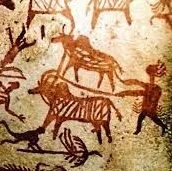
Archaeology has also uncovered prehistoric cave paintings at , megalithic burials in South India, Buddhist stupas like , and temple architecture across the country. Coins and inscriptions have helped identify kings, dynasties, trade relations, and languages.
Indian archaeology remains essential for preserving monuments and understanding ancient lifestyles.
Quiz Link: 1. Indian Archaeological Research-QUIZ.
2. Vedic Period
The Vedic period is one of the earliest historical phases of ancient India, roughly between 1500 BCE and 600 BCE. It is named after, the oldest religious literature of India.
The period is divided into:
- Early Vedic Period (1500–1000 BCE)
- Later Vedic Period (1000–600 BCE)
During the early Vedic age, society was largely pastoral. Cattle wealth was considered important. People lived in tribes led by chiefs called rajan. They worshipped natural forces. .
In the later Vedic age, agriculture expanded, iron tools were used, and kingdoms became stronger. Social organization became more structured through the varna system. Important texts such as the were composed, introducing ideas of karma, rebirth, and liberation.
The Vedic period laid the foundations of Indian religion, philosophy, language, and political traditions.
Quiz Link: 2.Vedic Period-QUIZ
3. Indus Valley Civilization
The Indus Valley Civilization, also known as the Harappan Civilization, flourished around 2600 BCE to 1900 BCE. It was one of the world’s earliest urban civilizations, alongside Mesopotamia and Egypt.
Major cities included and its key features included:
- Planned cities with grid patterns
- Advanced drainage systems
- Standardized weights and measures
- Trade with Mesopotamia
- Brick houses and granaries
- Craft production in beads, pottery, and seals
The famous Great Bath at Mohenjo-daro suggests ritual practices. The script of the civilization remains undeciphered. Their religion possibly included worship of fertility symbols, animals, and nature.
The decline of the civilization may have resulted from environmental changes, river shifts, and economic decline.
The Indus Valley Civilization demonstrates the advanced urban planning skills of ancient India.
Quiz Link: 3. Indus Valley Civilization-QUIZ
4. Jainism
Jainism is one of the oldest religions of India. It emphasizes non-violence, truth, self-discipline, and spiritual liberation. Jain tradition speaks of 24 Tirthankaras, of whom the last was (6th century BCE).
Mahavira was born in present-day Bihar and renounced worldly life to seek truth. After years of meditation, he attained enlightenment. His teachings include:
- Ahimsa (non-violence)
- Satya (truth)
- Asteya (non-stealing)
- Aparigraha (non-possession)
- Brahmacharya (celibacy/self-control)
Jainism opposed ritualism and stressed personal effort for salvation. It spread in regions like Bihar, Gujarat, Rajasthan, Karnataka, and Maharashtra.
Jain contributions include magnificent temples such as and , along with literature in Prakrit and Sanskrit.
Jainism deeply influenced Indian ethics, trade communities, and vegetarian traditions.
Quiz Link: 4.Jainism – QUIZ
5. Mauryan Emperor Ashoka
was one of the greatest rulers in Indian history. He ruled the from about 268 BCE to 232 BCE. He was the grandson of Chandragupta Mourya.
Ashoka is especially remembered for the , which caused immense destruction. Deeply moved by the suffering, Ashoka embraced Buddhism and adopted a policy of Dhamma based on compassion, tolerance, and justice.
His achievements include:
- Rock and pillar edicts across the empire
- Promotion of moral governance
- Roads, wells, and hospitals
- Support for Buddhism within and beyond India
- Diplomatic missions to Sri Lanka and other lands
This now the national emblem of India, and the Ashoka Chakra appears on the Indian flag.
Ashoka remains a symbol of peace and righteous rule.
Quiz Link: 5.Mourya Emperor Ashok-QUIZ
6. Satvahana Period
The Satvahanas ruled large parts of the Deccan from around the 1st century BCE to the 3rd century CE. They succeeded the Mauryas in many southern regions and played an important role in Deccan history.
Their early capital was Amaravati . Important rulers included and Major contributions:
- Revival of Brahmanical traditions with tolerance toward Buddhism
- Trade with the Roman world
- Use of Prakrit language in inscriptions
- Development of cave architecture such as and
- Issue of coins with ships, animals, and symbols
The Satvahana period was important for the cultural integration of North and South India. Maharashtra has many remains connected to this dynasty.
Quiz Link: 6.Satvahana Period-QUIZ
7. Gupta Period
The Gupta period (4th to 6th century CE) is often called the Golden Age of ancient India. The dynasty was founded by , but it rose to greatness under Chandragupta II and Samudraguta.
This period saw remarkable progress in:
- Literature: wrote famous works.
- Science: advanced mathematics and astronomy.
- Art: Beautiful sculptures and temple architecture flourished.
- Administration: Efficient governance and regional autonomy.
- Trade and prosperity.
The Gupta age also witnessed religious harmony among Hinduism, Buddhism, and Jainism.
Although later weakened by Hun invasions and internal decline, the Guptas left a lasting legacy in Indian culture.
Quiz Link: 7.Gupta Period- QUIZ
8.Vijay Nagar Empire
The was one of the greatest and most powerful empires in South Indian history. It was founded in 1336 CE by and on the banks of the Tungabhadra River. Its capital city was , now known as Hampi, a UNESCO World Heritage Site. The empire was established to resist invasions from northern powers and to protect South Indian culture and traditions.
The Vijayanagara rulers created a strong administration, efficient taxation system, and powerful military. The empire became wealthy through agriculture, internal trade, and overseas commerce with Arabia, Persia, and Europe. Horses, spices, textiles, and precious stones were major trade items. Markets in the capital city were famous for their prosperity and variety of goods.
One of the greatest rulers was (1509–1529 CE), under whom the empire reached its peak. He was an able warrior, administrator, and patron of art and literature. He encouraged Telugu, Kannada, Tamil, and Sanskrit scholars. His court included the famous group of poets known as the Ashtadiggajas.
The empire is also remembered for its magnificent architecture. Temples, palaces, markets, tanks, and fortifications built at Hampi display advanced engineering and artistic excellence. Famous monuments include the and the with its iconic stone chariot.
The decline of the empire began after the in 1565 CE, when combined Deccan Sultanates defeated Vijayanagara forces. The capital was destroyed, though the dynasty survived for some time elsewhere.
The Vijayanagara Empire played a major role in preserving Hindu culture, promoting trade, and encouraging literature and art. It remains a shining chapter in Indian history.
Quiz Link: 8.Vijay Nagar Empire- QUIZ
Conclusion
Indian history is a vast and fascinating journey from prehistoric archaeology to organized states and cultural golden ages. The Indus cities reveal early urban brilliance, the Vedic age shaped philosophy, Jainism emphasized ethics, Ashoka spread peace, the Satavahanas strengthened Deccan culture, and the Guptas enriched science and art. Studying these periods deepens our understanding of India’s enduring civilization.
To make learning more engaging, readers should attempt quizzes on each topic and continue exploring India’s historical treasures.


Leave a comment