
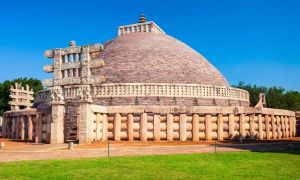
मध्य प्रदेशातील सांची स्तूप हे भारतातील सर्वात मौल्यवान युनेस्को जागतिक वारसा स्थळांपैकी एक आहे आणि देशाच्या प्राचीन बौद्ध वारशाचे प्रतीक आहे. ई.स.पूर्व तिसऱ्या शतकात सम्राट अशोकाच्या कारकिर्दीत बांधलेला, सांची येथील महान स्तूप केवळ एक स्थापत्य चमत्कारच नाही तर भारतीय उपखंडात बौद्ध धर्माचा प्रसार प्रतिबिंबित करणारा एक आध्यात्मिक प्रतीक देखील आहे. एका विशाल अर्धगोलाकार घुमटाने मुकुट घातलेला हा स्तूप बुद्धांच्या पवित्र अवशेषांना ठेवण्यासाठी बांधण्यात आला होता आणि तो यात्रेकरू आणि इतिहासप्रेमींसाठी श्रद्धेचे केंद्र राहिला आहे.
सांची खरोखर उल्लेखनीय बनवणारी गोष्ट म्हणजे त्याचे सुशोभित प्रवेशद्वार किंवा तोरण, जे बुद्धांच्या जीवनातील प्रसंग आणि विविध जातक कथा दर्शविणाऱ्या तपशीलवार कोरीवकामांनी सजवलेले आहेत. हे कोरीव काम केवळ प्राचीन कारागिरांच्या कलात्मकतेवर प्रकाश टाकत नाही तर बौद्ध शिकवणींसाठी दृश्य शास्त्र म्हणून देखील काम करते. लहान स्तूप, मठ आणि मंदिरांनी वेढलेले, हे स्थळ शतकानुशतके धार्मिक भक्ती आणि विकसित होत असलेल्या स्थापत्य शैलींचे प्रतिनिधित्व करते.
आज, सांची स्तूप भारताच्या सांस्कृतिक समृद्धतेचा पुरावा म्हणून उभा आहे, जो जगभरातील पर्यटकांना आकर्षित करतो जे त्याच्या शांत सौंदर्याचे आणि ऐतिहासिक खोलीचे साक्षीदार होतात. पर्यटकांसाठी ते एकाच ठिकाणी अध्यात्म, इतिहास आणि कला यांचा प्रेरणादायी अनुभव देते.
सांची स्तूपाचा इतिहास
मौर्य सम्राट अशोक सत्तेवर येण्यापूर्वी उज्जैन येथे राज्यपाल म्हणून काम पाहत होता.त्यावेळी विदिशा येथील श्रेणी प्रमुखाची मुलगी देवी हिच्या बरोबर त्याने विवाह केला होता. कलिंगच्या युद्धानंतर अशोकाने बौद्ध धर्माचा स्वीकार केला. बौद्ध धर्माचा प्रसार करण्यासाठी अशोकाने 84 हजार स्तूप आपल्या साम्राज्यात बांधले होते असे उल्लेख बौद्ध साहित्यातून मिळतात .गौतम बुद्धाच्या महानिर्वाणानंतर त्यांच्या अस्थी व दैनंदिन वापरातील वस्तू याच्यावर महाअष्टस्तूप बांधण्यात आले होते.सांची येथे गुप्त काळापर्यंत अनेक बौद्ध स्तूप व विहार बांधण्यात आले होते. गुप्त काळामध्ये हिंदू मंदिर स्थापत्य कलेचा उगम झाला होता. सांची येथे गुप्त काळात मंदिरे बांधण्यात आली होती .त्यापैकी एक मंदिर सांची येथे सध्या अस्तित्वात आहे. F.C.Maisey यांनी 1851 मध्ये सर्वप्रथम सांची येथील स्तूपांची रेखाचित्रे काढली होती.
सांची येथील बौद्ध स्तूप
सांची येथे सध्या तीन बौद्ध स्तूप अस्तित्वात आहेत. सांची येथील सर्व स्तूप बौद्ध धर्मातील हीनयान पंथाची असल्यामुळें गौतम बुद्धाची प्रतिमा कोणत्याही स्तुपावर आढळत नाही. सांची महास्तूप सम्राट अशोकाने बांधलेला आहे. येथील महा स्तूप सर्वात प्राचीन असून अशोकाच्या काळात या ठिकाणी एक मातीचा ढिगारा होता. अशोकाने याच्यावर विटा आणि दगड यांचा वापर करून त्याला स्तूपाचा आकार दिला. शुंग आणि सातवाहन राजांच्या काळात सांची येथील स्तूपाचे सुशोभीकरण करण्यात आले.अधिष्ठान, अंडाकृती घुमट, त्यावर हर्मिका आणि छत्रावली अशी बौद्ध स्तूपाची रचना असते. शुंग आणि सातवाहन काळात महा स्तुपाभोवती वेदिका, प्रदक्षणापथ आणि तोरणे उभारण्यात आली. महास्तूपा समोर एक अशोक स्तंभ उभारण्यात आला आहे.
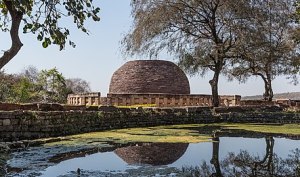
सांची स्तूप क्रमांक 2-सांची येथील या स्तूपाचे अधिष्ठान ,अंडाकृती घुमट आणि वेदिका यांचे अवशेष शिल्लक आहेत. या वेदिकांवर कोरलेली गोलाकार तबके वैशिष्ट्यपूर्ण आहेत. या तबकांवर प्रथमच गौतम बुद्धाच्या जीवनातील महत्त्वाचे प्रसंग , मानवी प्रतिमा, प्राणी ,पक्षी, फुले ,पाने यांच्या प्रतिमा कोरलेल्या आहेत. त्यामुळे शुंग आणि सातवाहन काळातील समाज दर्शन होते.
सांची स्तूप क्रमांक 3- सांची येथील तिसऱ्या स्तूपाचे अधिष्ठान अंडाकृती घुमट हर्मिका छत्रावली वेदिका आणि एक तोरण सध्या अस्तित्वात आहे या स्तूपामध्ये गौतम बुद्धाचे शिष्य सारीपुत्र आणि महामोग्गलाना यांच्या अस्थी ठेवलेल्या आहेत बौद्ध वास्तुकलेचा समृद्ध वारसा पाहण्यासाठी देश विदेशातील पर्यटक मोठ्या प्रमाणात सांची येथे भेट देतात
सांची स्तूप तोरणे
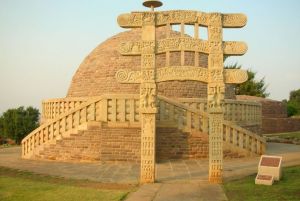
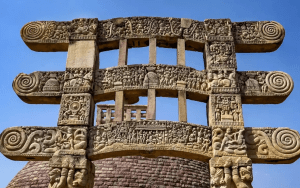
सांची येथील तोरणे अतिशय वैशिष्ट्यपूर्ण अशी आहेत. स्तूपाच्या चारही दिशेला ही तोरणे उभारलेली आहेत. शुंग आणि सातवाहन काळात ही तोरणे उभारलेली आहेत. महासतुपाच्या दक्षिण दिशेला असलेले तोरण सातवाहन काळात सर्वप्रथम उभारण्यात आले. दोन उभे स्तंभ आणि तीन आडव्या तुळया अशी याची रचना असते. सांची येथील तोरणांवर गौतम बुद्धाच्या जीवनातील महत्त्वाचे प्रसंग, ज्ञानप्राप्ती, पहिले प्रवचन यांचे शिल्पांकन केलेले आहे.तसेच जातककथा मधील काही कथा शिल्प रूपामध्ये दाखवलेले आहेत. या शिवाय कमळ, धम्मचक्र ,स्वर्गातील अप्सरा आणि बौद्ध भिक्खू यांच्या प्रतिमा कोरलेले आहेत.
सांची स्तूप अशोक स्तंभ
सांची येथील महा स्तूपासमोर अशोक स्तंभ आहे. येथील अशोक स्तंभ दगडी असून 40 फूट उंच आहे.हा स्तंभ घासून गुळगुळीत केलेला आहे. मौर्यकालीन शिल्पकलेचे हे एक वैशिष्ट्य आहे. स्तंभ शीर्षावर घंटाकृती पिठावर चार दिशेला तोंड करून उभे असलेले सिंह यांची प्रतिमा आहे .त्यांच्या डोक्यावर धम्मचक्र आहे. धम्मचक्र हे गौतम बुद्धाने सारनाथ येथे दिलेल्या पहिल्या प्रवचनाचे प्रतीक आहे. या स्तंभावर अशोकाचा ब्राह्मी लिपीतील कोरीव लेख आहे. पूर्वी हा स्तंभ सांची मधील इतर ठिकाणी होता. ब्रिटिश काळात हा स्तंभ महास्तुपाच्या दक्षिणेकडील तोरणासमोर स्थापन करण्यात आला. सांची येथील अशोक स्तंभ जगभरातील पर्यटकांचे खास आकर्षण आहे.
सांची परिसरातील पर्यटन स्थळे
सांची पासून जवळच्या परिसरात विदिशा गरुड स्तंभ, उदयगिरी लेणी,भीमबेटका शैलचित्रे,सांची आणि विदिशा येथील वस्तुसंग्रहालय पर्यटकांचे खास आकर्षण केंद्र आहेत.
विदिशा गरुड स्तंभ-सांची पासून जवळच असलेल्या विदिशा या ठिकाणी गरुड स्तंभ उभारलेला आहे. हा स्तंभ इंडो ग्रीक राजा अँटिअलकिडस याचा राजदूत हेलिओडोरस याने इस पूर्व दुसऱ्या शतकात उभारलेला आहे. गरुड स्तंभ वासुदेवाला (श्रीकृष्णाचे एक नाव) समर्पित केलेला आहे. स्तंभशीर्षावर विष्णूचे वाहन असलेले गरुडाची प्रतिमा कोरलेली आहे. या स्तंभावर ब्राम्ही लिपीतील प्राकृत भाषेतील एक कोरीव लेख आहे. या काळात शुंग राजा भागभद्र या प्रदेशात राज्य करत होता. सांची येथील येथे येणारे पर्यटक आवर्जून विदेशातील गरुड स्तंभ पाहण्यासाठी भेट देतात. Vidisha Location
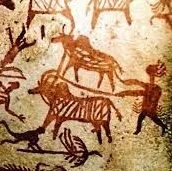
भीमबेटका येथे अश्मयुगीन गुहाआहेत. या गुहेमध्ये अश्मयुगीन मानवाने अप्रतिम शैलचित्रे रेखाटलेली आहेत. युनेस्कोने भीमबेटका स्थळाला जागतिक वारसा स्थळ म्हणून मान्यता दिली आहे. Bhimbetka Location
उदयगिरी लेणी– सांची पासून २० कि.मी. अंतरावर उदयगिरी लेणी आहेत. यातील शिल्पकला आणि वास्तुकला वैशिष्ट्यपूर्ण आहे.वस्तू संग्रहालय– सांची आणि विदिशा येथील वस्तू संग्रहालयात या प्रदेशातील संस्कृतिक व ऐतिहासिक वारसा जतन करण्यात आलेला आहे..संशोधक, विद्यार्थी तसेच पर्यटक या संग्रहालयांना आवर्जून भेट देतात.
सांची स्तूप येथील पर्यटकांसाठी सोयीसुविधा
सांची येथे पर्यटकांसाठी आद्ययावत माहिती केंद्र आहे. सांची येथील स्तूप ,त्यांचा इतिहास, शिल्पकला, वास्तुकला यांची माहिती देणारी पुस्तके या ठिकाणी उपलब्ध आहेत. याशिवाय स्थानिक मार्गदर्शक पर्यटकांना या स्थळाचा इतिहास तसेच शिल्पकला आणि वास्तुकला , वैशिष्ट्ये यांची माहिती देतात. काही पर्यटक ऑडिओ गाईडचाही लाभ घेतात .सांची युनेस्को वारसा स्थळ असल्यामुळे देश विदेशातील पर्यटकांना आवश्यक असणाऱ्या सर्व सोयी सुविधा या ठिकाणी उपलब्ध आहेत.
सारांश
मध्य प्रदेशातील युनेस्कोच्या जागतिक वारसा स्थळांपैकी एक असलेले सांची स्तूप हे प्राचीन भारतातील सर्वात महत्त्वाच्या स्मारकांपैकी एक आहे जे बौद्ध कला, वास्तुकला आणि अध्यात्माची खोली प्रतिबिंबित करते. ईसापूर्व तिसऱ्या शतकात सम्राट अशोकाने बांधलेले, सांची येथील महान स्तूप भगवान बुद्धांच्या पवित्र अवशेषांना मूर्त रूप देण्यासाठी बांधले गेले. शतकानुशतके, ते बौद्ध शिक्षण आणि तीर्थयात्रेचे एक प्रमुख केंद्र बनले, जे विविध प्रदेशातील भिक्षू, विद्वान आणि भक्तांना आकर्षित करते. त्याचे ऐतिहासिक महत्त्व सर्वात प्राचीन आणि सर्वोत्तम जतन केलेल्या बौद्ध स्मारकांपैकी एक असल्याने आहे, जे भारतीय वास्तुकलेची उत्क्रांती दर्शवते.
हे स्थळ त्याच्या भव्य अर्धगोलाकार घुमटासाठी आणि तोरण म्हणून ओळखल्या जाणाऱ्या विस्तृत कोरीवकाम प्रवेशद्वारांसाठी प्रसिद्ध आहे, जे उत्कृष्ट दगडी कोरीवकामाद्वारे बुद्धांच्या जीवनातील दृश्ये आणि जातक कथांचे वर्णन करतात. महान स्तूपाच्या सभोवताली लहान स्तूप, मठ आणि मंदिरे आहेत, जे पर्यटकांना प्राचीन काळातील धार्मिक आणि सांस्कृतिक पद्धतींची झलक देतात. सांची संग्रहालय त्याच्या गौरवशाली भूतकाळावर प्रकाश टाकणाऱ्या कलाकृती आणि शिल्पांनी अनुभव अधिक समृद्ध करते.
पर्यटकांसाठी, सांची एक शांत आणि समृद्ध अनुभव देते, ज्यामध्ये इतिहास, अध्यात्म आणि कला यांचा मिलाफ आहे. स्तूपाभोवती फिरणे, तपशीलवार कोरीवकाम पाहणे आणि शांत वातावरण आत्मसात करणे यामुळे पर्यटकांना भारताच्या कालातीत वारशाची शांती आणि कौतुकाची भावना निर्माण होते.
Sanchi Stupa: UNESCO Rich Cultural Heritage Site
The Sanchi Stupa in Madhya Pradesh is one of India’s most treasured UNESCO World Heritage Sites and a symbol of the country’s ancient Buddhist heritage. Built during the reign of Emperor Ashoka in the 3rd century BCE, the great stupa at Sanchi is not only an architectural marvel but also a spiritual symbol reflecting the spread of Buddhism in the Indian subcontinent. Crowned by a massive hemispherical dome, the stupa was built to house the sacred relics of the Buddha and remains a center of devotion for pilgrims and history buffs.
What makes Sanchi truly remarkable is its ornate gateways, or torans, which are decorated with detailed carvings depicting scenes from the Buddha’s life and various Jataka stories. These carvings not only highlight the artistry of ancient craftsmen but also serve as a visual guide to Buddhist teachings. Surrounded by smaller stupas, monasteries and temples, the site represents centuries of religious devotion and evolving architectural styles.
Today, the Sanchi Stupa stands as a testament to India’s cultural richness, attracting tourists from all over the world who witness its serene beauty and historical depth. For tourists, it offers an inspiring experience of spirituality, history, and art all in one place.
History of Sanchi Stupa
Mauryan Emperor Ashoka was working as the Governor of Ujjain before he came to power. At that time he was married to Devi, the daughter of a range chief of Vidisha. After the war of Kalinga, Ashoka converted to Buddhism. It is mentioned in Buddhist literature that Ashoka built 84 thousand stupas in his empire to spread Buddhism. After Mahanirvana of Gautama Buddha, Maha Ashtastupa was built on his bones and daily use items. Many Buddhist stupas and viharas were built in Sanchi till the Gupta period. Hindu temple architecture originated in the Gupta period. Temples were built in Sanchi during the Gupta period. One of them is still existing in Sanchi. F.C.Maisey was the first to draw the stupas at Sanchi in 1851.
Buddhist Stupas at Sanchi
There are currently three Buddhist stupas in Sanchi. As all the stupas in Sanchi belong to the Hinayana sect of Buddhism, the image of Gautama Buddha is not found on any of the stupas. Mahastupa was built by Emperor Ashoka. The Sanchi Maha Stupa here is the oldest and there was an earthen mound at this place during Ashoka’s time. Ashoka used bricks and stones to shape it into a stupa. The stupa at Sanchi was embellished during the Shunga and Satavahana kings. It has a Buddhist stupa design with an adhishthan, an oval dome, surmounted by a harmika and a chhatravali. During the Shunga and Satavahana periods, altars,pradakshanapathas and pylons were erected around the Maha Stupa. An Ashoka pillar has been erected in front of the Mahastupa.
Sanchi Stupa No. 2 – Remains of this stupa at Sanchi include the adhisthana, oval dome and altar. The circular plates carved on these altars are characteristic. Important events in the life of Gautama Buddha, human images, animals, birds, flowers, leaves are engraved on these plates for the first time. Therefore, the society of the Shunga and Satavahana period is seen.
Sanchi Stupa No. 3– The third Stupa in Sanchi, the oval dome Harmika Chhatravali Vedika and a toran are present in this stupa which houses the remains of Sariputra and Mahamoggalana, the disciples of Gautama Buddha. Tourists from home and abroad visit Sanchi in large numbers to see the rich heritage of Buddhist architecture.
Gateways (Toranas) of Sanchi Stupa
The Toranas of Sanchi are very unique. These pylons are erected on all four sides of the stupa. These pylons were erected during the Shunga and Satavahana periods. The pylon on the south side of the Mahasatupa was first erected during the Satavahana period. It consists of two vertical columns and three horizontal beams. Important events in the life of Gautama Buddha, enlightenment, first discourse are sculpted on the pylons at Sanchi. Also, some stories from the Jataka stories are shown in sculpture form. Apart from this, the images of lotus, Dhammachakra, celestial nymphs and Buddhist monks are carved.
Sanchi Stupa Ashoka Pillar
In front of the Maha Stupa at Sanchi is the Ashoka Pillar. The Ashoka pillar here is made of stone and is 40 feet high. This pillar is rubbed smooth. This is a characteristic of Mauryan sculpture. At the top of the pillar is an image of a lion standing on a bell-shaped pitha facing the four directions.On his head is the Dhammachakra. The Dhamma Chakra symbolizes Gautama Buddha’s first discourse at Sarnath. This pillar bears an inscription of Ashoka in Brahmi script. Earlier this pillar was located elsewhere in Sanchi. During the British period, this pillar was erected in front of the southern pylon of the Mahastupa. The Ashoka Pillar in Sanchi is a special attraction for tourists from all over the world.
Tourist Places near Sanchi Area
Vidisha Garuda Pillar, Udayagiri Caves, Bhimbetka Rock Paintings, Museums of Sanchi and Vidisha in the vicinity of Sanchi are special attractions for tourists.
Vidisha Pillar-This column was erected by Heliodorus, the ambassador of the Indo-Greek king Antialkidus, in the 2nd century BC. The Garuda pillar is dedicated to Vasudeva (a name of Lord Krishna). On the top of the pillar is carved an image of Garuda, the vehicle of Vishnu. This pillar has an inscription in Prakrit in Brahmi script. During this period Shunga king Bhagabhadra was ruling the region. Tourists coming here from Sanchi must visit to see the Garuda pillar from abroad. Udayagiri Caves– 20 km from Sanchi. In the distance are the Udayagiri Caves. Its sculpture and architecture are unique. Bhimbetka- Bhimbetka has fossil caves. In this cave there are amazing rock paintings drawn by the Paleolithic man. UNESCO has recognized the Bhimbetka site as a World Heritage Site. Artifacts Museum- Artifacts Museums at Sanchi and Vidisha preserve the cultural and historical heritage of the region..Researchers, students as well as tourists visit these museums without fail.
Tourists Facilities at Sanchi Stupa
Sanchi has an up-to-date information center for tourists. Books providing information about Stupas of Sanchi, their history, sculpture, architecture are available at this place. Apart from this, the local guides inform the tourists about the history of the place as well as the sculpture and architecture, features. Some tourists also take advantage of audio guides. As Sanchi is a UNESCO heritage site, all the facilities required by tourists from home and abroad are available at this place.
Summary
Sanchi Stupa, one of the UNESCO World Heritage Sites in Madhya Pradesh, is one of the most important monuments of ancient India that reflects the depth of Buddhist art, architecture and spirituality. Built by Emperor Ashoka in the 3rd century BCE, the Great Stupa at Sanchi was built to enshrine the sacred relics of Lord Buddha. Over the centuries, it became a major centre of Buddhist learning and pilgrimage, attracting monks, scholars and devotees from various regions. Its historical significance lies in being one of the oldest and best-preserved Buddhist monuments, which shows the evolution of Indian architecture.
The site is famous for its magnificent hemispherical dome and elaborately carved gateways known as torans, which depict scenes from the life of the Buddha and Jataka stories through exquisite stone carvings. The Great Stupa is surrounded by smaller stupas, monasteries and temples, which give tourists a glimpse into the religious and cultural practices of ancient times. The Sanchi Museum further enriches the experience with artefacts and sculptures that shed light on its glorious past.
For tourists, Sanchi offers a serene and enriching experience, combining history, spirituality and art. Wandering around the stupa, viewing the detailed carvings and absorbing the serene atmosphere, gives tourists a sense of peace and appreciation for India’s timeless heritage.


 Incredible Heritage