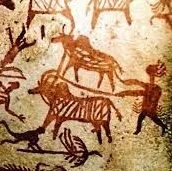

भारतातील जैन लेणी ही प्रामुख्याने इसवी सन पूर्व दुसरे शतक ते इसवी सन दहावे शतक या काळात निर्माण झालेली, प्राचीन पाषाण-शिल्पकला आणि आध्यात्मिक कलेची उत्कृष्ट उदाहरणे आहेत. ही लेणी अनेकदा जैन साधूंसाठी मठ, ध्यान-मंडप आणि उपासना स्थळे म्हणून वापरली जात असत. यातील काही उल्लेखनीय ठिकाणांमध्ये ओडिशामधील उदयगिरी आणि खंडगिरी लेण्यांचा समावेश होतो, ज्या ‘हाथीगुंफा’ शिलालेखासारख्या प्राचीन नोंदींसाठी प्रसिद्ध आहेत; तसेच महाराष्ट्रातील एलोरा (वेरूळ) येथील जैन लेणी, जी तेथील सूक्ष्म कोरीव काम आणि ‘इंद्र सभा’ लेण्यांसाठी ओळखली जातात; कर्नाटकातील बदामी लेणी, जिथे भगवान महावीर आणि पार्श्वनाथ यांच्या प्रतिमा कोरलेल्या आहेत; आणि तामिळनाडूतील सिट्टनवासल लेणी, जी जैन साधूंशी संबंधित प्राचीन भित्तिचित्रांसाठी प्रसिद्ध आहेत. ही स्थळे भारताचा पाषाण-शिल्पकलेचा समृद्ध वारसा दर्शवतात आणि आजही महत्त्वाची सांस्कृतिक व पर्यटन स्थळे म्हणून ओळखली जातात.
वेरूळची जैन लेणी: पाषाण-कोरीव कलेचे उत्कृष्ट नमुने
महाराष्ट्रातील छत्रपती संभाजीनगर (औरंगाबाद) जवळ असलेल्या ‘वेरुळच्या जैन लेण्या’ (Ellora Jain Caves) या युनेस्कोच्या जागतिक वारसा स्थळांच्या यादीत समाविष्ट असलेल्या वेरुळ लेण्यांचा सर्वात उत्तरेकडील भाग आहेत. ३० ते ३४ क्रमांकाच्या या भव्य लेण्यांची निर्मिती इसवी सनाच्या ९ व्या आणि १० व्या शतकात, म्हणजेच राष्ट्रकूट काळात करण्यात आली. प्रामुख्याने जैन धर्माशी संबंधित असलेल्या या लेण्या वेरुळमधील शैल-वास्तुकलेचा (rock-cut architecture) अंतिम टप्पा दर्शवतात आणि त्या आपल्या उत्कृष्ट शिल्पकलेसाठी, नजाकतदार कारागिरीसाठी व आध्यात्मिक वातावरणासाठी प्रसिद्ध आहेत.
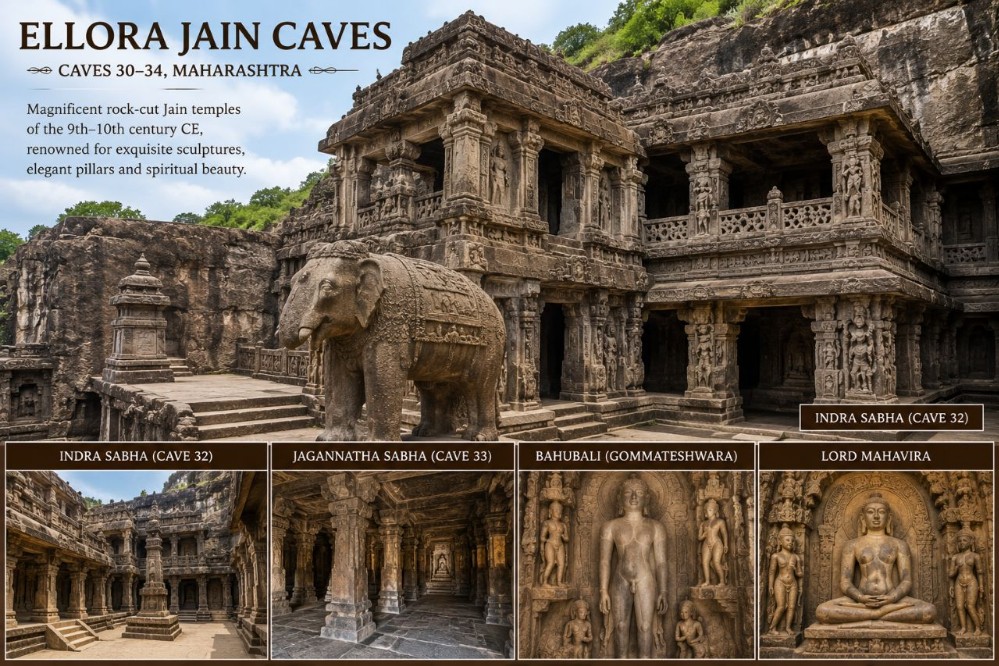
वेरुळमधील बौद्ध आणि हिंदू लेण्यांच्या तुलनेत आकाराने लहान असूनही, या जैन लेण्यांमध्ये असाधारण कलात्मक नैपुण्य दिसून येते. त्या जैन धर्माच्या दिगंबर परंपरेचे प्रतिनिधित्व करतात आणि जैन साधू व भाविकांसाठी मठ, ध्यान-मंडप व मंदिरे म्हणून त्यांची निर्मिती करण्यात आली होती. येथील कोरीव काम आध्यात्मिक शिस्त, अहिंसा आणि त्याग या मूल्यांवर भर देते, तसेच त्यासोबतच विलक्षण सौंदर्यपूर्णताही जपते.
वेरूळ येथील लेणी समूहात हिंदू, बौद्ध व जैन लेणी खोदलेल्या आहेत. येथील समूहात एकूण 34 लेणी आहेत. त्यातील 12 लेणी बौद्ध धर्मीय आहेत ,17 लेणी हिंदू धर्मीय आहेत तर ५ लेणी जैन धर्मीय आहेत.वेरूळ येथील क्रमांक ३० ,३१, ३२, ३३ आणि ३४ क्रमांकाची लेणी जैन धर्मिय आहेत.
छोटा कैलास वेरूळ -वेरूळ एलोरा येथील जैन लेणी समूह छोटा कैलास -वेरूळ येथील लेणी क्रमांक 30 छोटा कैलास या नावाने ओळखली जाते. या लेण्यातील वायव्येला एक अर्धवट खोदलेले लेणे आहे. मुख मंडप त्यामागे दोन बाजूंच्या टोकांना प्रत्येकी एक दालन असलेला व्हरांडा आणि त्यामागे अपूर्ण अवस्थेत असलेला मंडप अशी याची रचना आहे. मुख मंडपावर तसेच ओवरीच्या वरच्या भागावर आणि मंडपावर जैन देवतांच्या मूर्ती मोठ्या प्रमाणावर कोरलेल्या आहेत. मुख दर्शनाच्या वरच्या भागात अनेक मजली शिखर उठावा मध्ये कोरलेले आहे. अपूर्णावस्थेतील मंडपाच्या मध्यभागी एक मोठा स्तंभ असून त्याच्या चारही बाजूंवर जैन तीर्थकारांच्या मूर्ती कोरलेल्या आहेत.
इंद्रसभा -वेरूळ एलोरा जैन लेणी समूहातील इंद्रसभा-वेरूळ जैन लेणी समूहातील क्रमांक 32 चे लेणे इंद्र सभा या नावाने ओळखले जाते. या लेण्यांमध्ये प्रवेश करताना गोपूरातून जावे लागते. गोपुरातून प्रवेश केल्यानंतर प्रांगण लागते. प्रांगणाच्या मध्यभागी मंदिर आहे. या मंदिराच्या एका बाजूस हत्ती आणि दुसऱ्या बाजूस स्तंभ आहे. येथील हत्ती कैलास लेण्यातील हत्तीप्रमाणेच आहे. दुसऱ्या बाजूस असलेल्या स्तंभावर एकमेकांकडे पाठ करून असलेले व वेगवेगळ्या दिशांना तोंड करून असलेले यक्ष आहेत. स्तंभाला लागून ओवरी तसेच चार स्तंभांवर योजलेला मंडप मंडपाच्या मागे गर्भगृह अशी रचना असलेले मंदिर आहे. या मंदिरापलीकडे आणखी एक मंदिर असून त्याच्यासमोर आणखी एक मंदिर आहे. या तिन्ही मंदिरांमध्ये कमी अधिक प्रमाणात जैन देवतांच्या मूर्ती व तीर्थंकरांच्या मूर्ती कोरलेले आहेत. ही तिन्ही मंदिरे प्रांगणाच्या डाव्या बाजूस आहेत. प्रांगणाच्या उजव्या बाजूस मंदिरे नाहीत. येथील प्रांगणातील सर्वात आकर्षक वास्तू म्हणजे मध्यभागी असलेले मंदिर होय. या मंदिराचे शिखर कैलास शिखराप्रमाणेच आहे.
इंद्रसभा पहिला मजला -इंद्रसभा लेणे दोन मजली आहे. खालच्या मजल्यावरील लेण्यांमध्ये जाण्यासाठी पायऱ्या आहेत. खालच्या मजल्यावर तीर्थंकारांच्या दोन मूर्ती कोरलेल्या आहेत. यापैकी एक मूर्ती शांतीनाथांची आहे.इंद्रसभेच्या वरच्या मजल्यावरील मंदिर संकुल खूप प्रेक्षणीय आहे. एका बाजूने वर जाण्यासाठी पायऱ्या केलेले आहेत. मुख्य गर्भगृह दक्षिणेकडे तोंड करून आहे. गर्भगृहाच्या दोन बाजूस उपगर्भगृह आहेत. मुख्य मंडपाच्या दोन भिंतीमध्ये देव कोष्टक केल्या असून पार्श्वनाथांची मूर्ती त्यामध्ये आहे. बाहुबली चे महात्म्य दाखवणारा कथा शिल्पपट त्यामध्ये आहे. ओवरीच्या दोन्ही बाजूंवर जैन देवता अंबिका आणि यक्ष दाखवलेला आहे. इंद्र सभेच्या छतावर आतील बाजूस छतावर चित्रकाम केलेले आहे. त्यामध्ये जैन धर्मातील अनेक कथानके चित्रित करण्यात आली आहेत.
जगन्नाथ सभा-वेरूळ येथील लेणी क्रमांक 33 जगन्नाथ सभा या नावाने ओळखली जाते. या लेण्यांमध्ये प्रवेश केल्यानंतर प्रांगणाच्या तिन्ही बाजूस लेण्या खोदलेले आहेत. जगन्नाथ सभेच्या खालच्या मजल्यावर दोन छोटी व दोन मोठी मंदिरे आहेत. त्यापैकी एका छोट्या मंदिरांमध्ये गर्भ गृह नाही. यामध्ये बसलेल्या तीर्थंकारांची मुख्यमूर्ति असून ही मूर्ती मंडपाच्या मागील भिंतीमध्ये मधोमध देवकोष्टात आहे. मागील भिंतीवर एका बाजूला यक्ष आणि दुसऱ्या बाजूला अंबिका यांच्या मूर्ती आहेत.
जगन्नाथ सभा तीर्थंकरांच्या मूर्ती– मंडपाच्या भिंतीवर बसलेल्या तीर्थकारांचे दोन पट्ट दाखवले आहेत. या मंडपामध्ये डाव्या भिंतीत कोरलेले शिल्पपट वैशिष्ट्यपूर्ण आहेत. ओवरीच्या भिंतीवर पार्श्वनाथ ,यक्ष यक्षी आणि भक्तगण दाखवले आहेत. तळमजल्यावरील दुसऱ्या छोट्या मंदिरामध्ये मंडप आणि गर्भगृह अशी रचना आहे. मंडपाच्या मागील भिंतीवर गर्भ ग्रहाच्या दोन्ही बाजूस अंबिका, यक्षी आणि यक्ष दाखवले आहेत. मंडपाच्या बाजूच्या भिंतीवर पार्श्वनाथ आणि बाहुबली यांच्या मूर्ती आहेत. मंडपाच्या प्रवेशद्वाराच्या दोन्ही बाजूच्या भिंतीवर प्रत्येक प्रत्येकी एक याप्रमाणे तीर्थंकरांच्या मूर्ती आहेत. गर्भ गृहाच्या तीन भिंतीवर तीर्थंकरांच्या बैठ्या मूर्ती आहेत. तळमजल्यावरील मोठ्या लेण्यांची रचनाही अशीच आहे. पुढे स्तंभ असलेली ओवरी ,मंडप, अंतराळ आणि गर्भ गृह अशी त्याची रचना आहे. या मंदिरामध्येही अंबिका, यक्षी, यक्ष, पार्श्वनाथ आणि बाहुबली यांची मूर्ती शिल्पे आहेत. या मंदिरामध्ये साधारण 22 तीर्थंकरांच्या मूर्ती आहेत.
जगन्नाथ सभेच्या वरच्या मजल्यावर एक मंदिर असून मंडप आणि गर्भगृह अशी त्याची रचना आहे. गर्भ गृहाच्या प्रवेशद्वाराच्या दोन्ही बाजूला यक्ष यक्षी आहेत आणि दोन्ही बाजूच्या भिंतींवर तीर्थंकरांच्या मूर्तीपट्ट आहेत.
खंडगिरी जैन लेणी: प्राचीन जैन वारशाचा ठेवा
ओडिशातील भुवनेश्वर येथे स्थित असलेल्या खंडगिरी जैन गुहा या भारतातील सर्वात जुन्या आणि महत्त्वपूर्ण पाषाण-निर्मित (rock-cut) स्मारकांपैकी एक आहेत. जवळच असलेल्या उदयगिरी गुहांसोबत मिळून, त्या जैन धर्माचा समृद्ध इतिहास दर्शवणारा एक महत्त्वाचा पुरातत्वीय आणि धार्मिक परिसर तयार करतात. या गुहांची निर्मिती इसवी सन पूर्व पहिल्या शतकात, महामेघवाहन वंशाचा शक्तिशाली राजा खारवेल याच्या आश्रयाखाली करण्यात आली होती. जैन साधूंसाठी निवारा आणि ध्यानाची ठिकाणे म्हणून वापरल्या जाणाऱ्या या गुहा, भारताच्या प्राचीन आध्यात्मिक आणि कलात्मक परंपरांचे एक चिरंतन प्रतीक आहेत.

खंडगिरी टेकडीवर १५ पाषाण-निर्मित गुहा आहेत, तर लगतच्या उदयगिरी टेकडीवर १८ गुहा आहेत. उदयगिरी गुहांच्या तुलनेत रचना साधी असली तरी, खंडगिरी गुहांना प्रचंड ऐतिहासिक आणि धार्मिक महत्त्व आहे. नैसर्गिक वाळूच्या दगडांच्या (sandstone) टेकड्यांमध्ये कोरलेल्या या गुहांमध्ये ध्यान आणि तपस्वी जीवनासाठी शांत वातावरण देणाऱ्या लहान खोल्या आहेत. त्यांची साधी वास्तुकला जैन धर्मातील संयम, शिस्त आणि सांसारिक सुखांपासून अलिप्त राहणे या आदर्शांचे प्रतिबिंब दर्शवते.
खंडगिरीमधील सर्वात महत्त्वाच्या गुहांपैकी एक म्हणजे ‘अनंत गुंफा’ (अनंत गुहा); ही गुहा हत्ती, सिंह, मानवी आकृत्या, वेली आणि फुलांच्या नक्षीकामासाठी प्रसिद्ध आहे. हे कोरीव काम प्राचीन कारागिरांचे कलात्मक कौशल्य दर्शवते आणि त्याच वेळी जैन परंपरांमधील विविध विषयही मांडते. इतर उल्लेखनीय गुहांमध्ये ‘ततोवा गुंफा’ (पोपट गुहा) – जिच्या प्रवेशद्वारावर पोपटांची नक्षी कोरलेली आहे – आणि ‘नवमुनी गुंफा’ – जिथे जैन तीर्थंकरांच्या प्रतिमा आहेत – यांचा समावेश होतो.
या गुहांमध्ये असे शिलालेखही जतन केलेले आहेत जे प्राचीन ओडिशाचा राजकीय, सामाजिक आणि धार्मिक इतिहास याबद्दल मौल्यवान माहिती देतात. उदयगिरी येथील ‘हाथीगुंफा शिलालेख’ – जो राजा खारवेल याने कोरवून घेतला होता – हा सुरुवातीच्या काळातील भारतातील सर्वात महत्त्वाच्या ऐतिहासिक दस्तऐवजांपैकी एक आहे. यात राजाची कामगिरी, लष्करी विजय, जनहितार्थ केलेली कामे आणि जैन धर्माला दिलेला राजाश्रय यांचे वर्णन केले आहे.
आज, खंडगिरी जैन गुहांचे जतन ‘भारतीय पुरातत्व सर्वेक्षण’ (ASI) द्वारे केले जाते आणि दरवर्षी हजारो भाविक, इतिहासकार, पुरातत्वशास्त्रज्ञ आणि पर्यटक येथे भेट देतात. टेकडीच्या माथ्यावरून भुवनेश्वरचे विहंगम दृश्य दिसते, ज्यामुळे हे ठिकाण वारसाप्रेमी आणि निसर्गप्रेमी अशा दोघांसाठीही लोकप्रिय बनले आहे. जैन धर्माचा सण असलेल्या ‘महावीर जयंती’च्या काळात भरणारा वार्षिक ‘खंडगिरी मेळा’ या ठिकाणाचे धार्मिक महत्त्व अधिक अधोरेखित करतो. खंडागिरी येथील जैन लेणी ही केवळ प्राचीन पाषाण-शिल्पकलेचा एक उत्कृष्ट नमुनाच नाहीत, तर भारताच्या समृद्ध जैन वारशाचा एक जिवंत पुरावा देखील आहेत. त्यांचे ऐतिहासिक महत्त्व, कलात्मक सौंदर्य आणि आध्यात्मिक वातावरण यामुळे भारतीय पुरातत्वशास्त्र, धर्म आणि सांस्कृतिक इतिहास यात रस असणाऱ्या प्रत्येकासाठी हे एक अत्यंत महत्त्वाचे ठिकाण ठरते. खंडागिरीला भेट देणे म्हणजे जैन तत्त्वज्ञानाचा चिरंतन वारसा आणि प्राचीन भारतीय कारागिरांची उल्लेखनीय कामगिरी यांचा अनुभव घेण्याची एक अद्वितीय संधी होय.
उदयगिरी जैन लेणी: राजा खारावेलाचा गौरवशाली वारसा
ओडिशामधील भुवनेश्वरजवळ स्थित असलेल्या उदयगिरी जैन गुहा या भारतातील सुरुवातीच्या काळातील पाषाण-वास्तुकलेच्या (rock-cut architecture) उत्कृष्ट नमुन्यांपैकी एक आहेत. शेजारील खंडगिरी गुहांसह, त्या प्राचीन जैन धर्माच्या सर्वात महत्त्वाच्या केंद्रांपैकी एक प्रतिनिधित्व करतात. या गुहांची निर्मिती इसवी सन पूर्व पहिल्या शतकात महामेघवाहन वंशाचा राजा खारवेल याच्या आश्रयाखाली करण्यात आली होती. जैन भिक्खूंसाठी निवासस्थान, ध्यानस्थळ आणि उपासनास्थळ म्हणून वापरल्या जाणाऱ्या या गुहा पूर्व भारतातील जैन धर्माच्या भरभराटीचे दर्शन घडवतात.
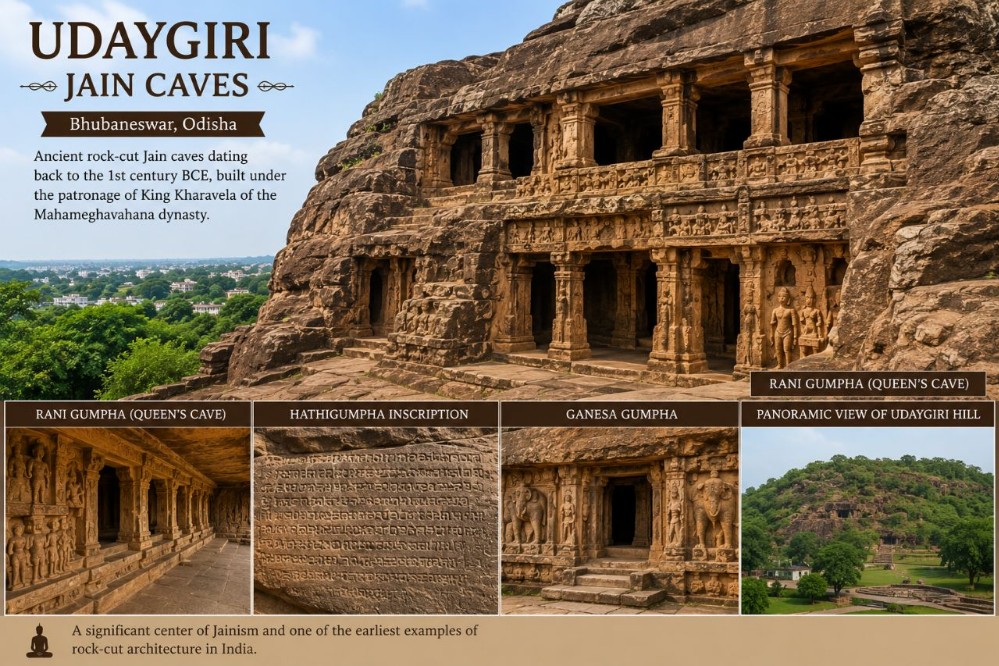
उदयगिरी टेकडीवर १८ पाषाण-निर्मित गुहा आहेत; त्यातील प्रत्येक गुहा वालुकाश्मातून (sandstone) अत्यंत कलात्मक कौशल्याने कोरलेली आहे. खंडगिरी येथील तुलनेने साध्या गुहांच्या तुलनेत उदयगिरीतील गुहा अधिक भव्य आणि कलाकुसरयुक्त आहेत. येथे कोरीव दर्शनी भाग, खांब, सजावटीचे कमानी आणि राजदरबारातील मिरवणुका, नर्तक, संगीतकार, प्राणी व धार्मिक प्रतीके दर्शवणारी सूक्ष्म शिल्पकला पाहायला मिळते. ही शिल्पकला प्राचीन ओडिशामधील सामाजिक, सांस्कृतिक आणि धार्मिक जीवनाविषयी मोलाची माहिती पुरवते.
उदयगिरीमधील सर्वात प्रसिद्ध स्मारक म्हणजे ‘राणी गुंफा’ (राणीची गुहा); ही या समूहातील सर्वात मोठी आणि सर्वाधिक सुंदररीत्या सजवलेली गुहा आहे. दोन मजली असलेली ही गुहा तिच्या प्रशस्त ओट्यांसाठी, सुबक कोरीव खांबांसाठी आणि दरबारी जीवन, शिकार, संगीत व नृत्य यांचे प्रसंग दर्शवणाऱ्या कथात्मक फलकांसाठी (narrative panels) प्रसिद्ध आहे. तिला सुरुवातीच्या काळातील भारतीय पाषाण-वास्तुकलेचा एक उत्कृष्ट नमुना मानले जाते.
आणखी एक महत्त्वपूर्ण स्मारक म्हणजे ‘हाथी गुंफा’ (हत्तीची गुहा), जिथे राजा खारवेलचा प्रसिद्ध ‘हाथी गुंफा शिलालेख’ आहे. सुरुवातीच्या ब्राह्मी लिपीत आणि प्राकृत भाषेत लिहिलेला हा शिलालेख राजाच्या लष्करी मोहिमा, जनहितार्थ केलेली कामे, धार्मिक कार्यांना दिलेला राजाश्रय आणि जैन धर्माप्रती असलेली त्याची निष्ठा यांची नोंद करतो. हा प्राचीन भारतातील सर्वात मौल्यवान ऐतिहासिक शिलालेखांपैकी एक असून त्या काळातील राजकीय इतिहासाचा एक महत्त्वाचा स्रोत आहे.
इतर उल्लेखनीय गुहांमध्ये हत्तींच्या शिल्पकलेसाठी प्रसिद्ध असलेली ‘गणेश गुंफा’ आणि सुंदर शिल्पकलेसाठी ओळखली जाणारी ‘जय-विजय गुंफा’ यांचा समावेश होतो. या सर्व गुहा एकत्रितपणे सुरुवातीच्या काळातील भारतीय पाषाण-वास्तुकलेचा विकास आणि राजाश्रयाखाली साध्य झालेली कलात्मक उत्कृष्टता दर्शवतात.
आज, उदयगिरी गुहांचे जतन ‘भारतीय पुरातत्व सर्वेक्षण’ (ASI) द्वारे केले जाते आणि त्या जगभरातील भाविक, इतिहासकार, पुरातत्वशास्त्रज्ञ व पर्यटकांना आकर्षित करतात. ऐतिहासिक शिलालेख, धार्मिक महत्त्व आणि कलात्मक सौंदर्य यांचा संगम या स्थळांना ओडिशामधील सर्वाधिक भेट दिल्या जाणाऱ्या वारसा स्थळांपैकी एक बनवतो.
उदयगिरी येथील जैन लेणी ही जैन धर्माचा प्रसार, राजा खारवेळ यांची दूरदृष्टी आणि प्राचीन भारतातील वास्तुशिल्प-कौशल्य यांचा एक उत्कृष्ट पुरावा आहेत. पुरातत्त्वशास्त्र, धर्म आणि भारताचा समृद्ध सांस्कृतिक वारसा यांत रस असणाऱ्या प्रत्येकासाठी हे एक अत्यंत महत्त्वाचे ठिकाण आहे.
बदामी जैन लेणी: चालुक्यकालीन शैल-वास्तुकलेचा एक अनमोल ठेवा
कर्नाटकातील बदामी या ऐतिहासिक शहरात ‘बदामी जैन गुहा’ (जी ‘गुहा ४’ म्हणूनही ओळखली जाते) स्थित आहे. बदामी येथील चार प्रसिद्ध पाषाण-निर्मित (रॉक-कट) गुहांपैकी ही सर्वात अलीकडील गुहा असून, ती इसवी सनाच्या सहाव्या शतकाच्या उत्तरार्धात किंवा सातव्या शतकाच्या सुरुवातीला, म्हणजेच ‘प्रारंभिक चालुक्य’ राजवटीच्या काळात कोरली गेली होती. जैन धर्माला समर्पित असलेली ही गुहा चालुक्यकालीन शिल्पकारांची उत्कृष्ट कलाकुसर आणि प्राचीन भारतातील विविध धार्मिक परंपरांचे शांततापूर्ण सहअस्तित्व दर्शवते.
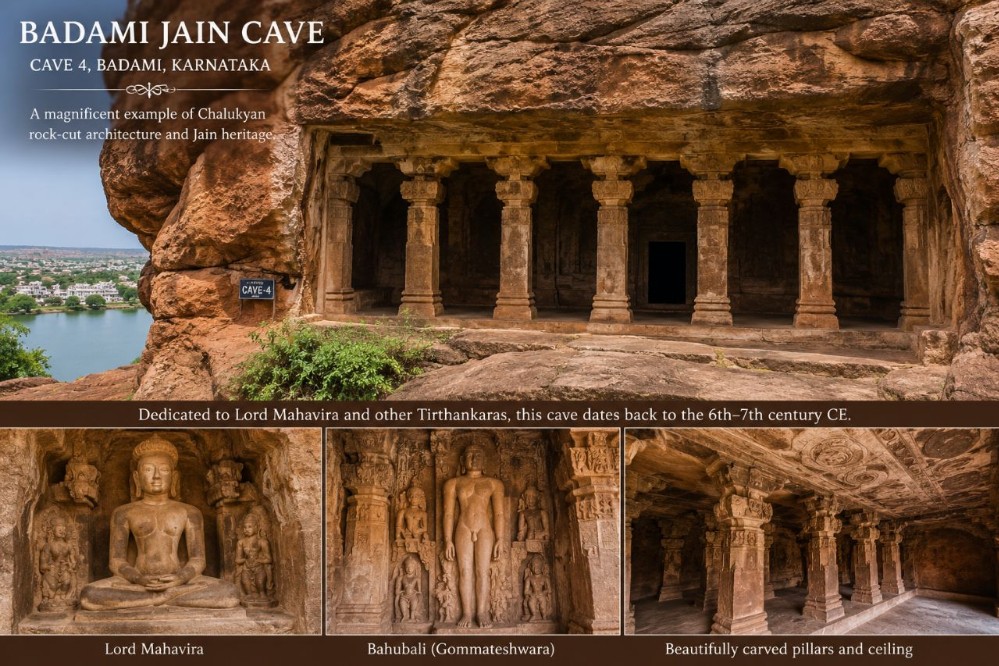
इतर तीन गुहा प्रामुख्याने हिंदू धर्माला समर्पित असताना, ही चौथी गुहा मात्र जैन तीर्थंकरांना समर्पित आहे. अगस्त्य सरोवराच्या समोर असलेल्या वालुकाश्माच्या (सँडस्टोन) कड्यांमध्ये ही गुहा कोरली गेली असून, येथून परिसराचे विहंगम दृश्य दिसते. ही गुहा जैन साधूंसाठी उपासना आणि ध्यानाचे ठिकाण म्हणून वापरली जात असे.
या गुहेतील सर्वात लक्षणीय शिल्प म्हणजे ध्यानस्थ मुद्रेत बसलेले चोविसावे तीर्थंकर भगवान महावीर यांची भव्य प्रतिमा. तितकेच प्रभावी शिल्प म्हणजे ‘कायोत्सर्ग’ मुद्रेत (शरीराचे भान विसरून स्थिर उभे राहण्याची मुद्रा) उभे असलेले बाहुबली (गोम्मटेश्वर) यांचे शिल्प; जे पूर्ण अनासक्ती आणि आध्यात्मिक विजयाचे प्रतीक आहे. अनेक फणे असलेल्या सर्पाचे छत्र असलेली पार्श्वनाथांची मूर्ती आणि इतर जैन प्रतिमा या गुहेचे धार्मिक महत्त्व अधिकच वाढवतात.
फुलांची नक्षी, पौराणिक जीव आणि भौमितिक आकृत्यांनी सजवलेल्या सुंदर खांबांवर ही गुहा आधारलेली आहे. छतावर कमळाची नक्षी (कमळ-चक्र) आणि शोभिवंत कोरीव काम आढळते, जे चालुक्य काळातील कलात्मक प्रगल्भता दर्शवते. बदामीमधील हिंदू गुहांच्या तुलनेत ही जैन गुहा अधिक साधी असली, तरीही येथे शांतता आणि आध्यात्मिक चिंतनाचे वातावरण अनुभवता येते.
बदामी जैन गुहा ही प्रारंभिक चालुक्य राज्यकर्त्यांच्या धार्मिक सहिष्णुतेचे उदाहरण आहे; ज्यांनी हिंदू, बौद्ध आणि जैन अशा विविध धर्मांना राजाश्रय दिला होता. हे स्मारक साध्या पाषाण-निर्मित मंदिरांपासून ते नंतरच्या शतकांमध्ये विकसित झालेल्या अधिक भव्य मंदिर स्थापत्यशैलीकडे झालेल्या स्थित्यंतराचेही दर्शन घडवते.
आज ही गुहा ‘भारतीय पुरातत्व सर्वेक्षण’ (ASI) द्वारे संरक्षित असून ती लोकप्रिय ‘बदामी-ऐहोळे-पट्टदकल’ या वारसा स्थळांच्या मालिकेचा (हेरिटेज सर्किटचा) एक भाग आहे. तिचे ऐतिहासिक महत्त्व, कलात्मक सौंदर्य आणि अगस्त्य सरोवराच्या सानिध्यातील निसर्गरम्य स्थान पर्यटकांना आकर्षित करते.
बदामी जैन गुहा हे प्रारंभिक मध्ययुगीन भारतीय पाषाण-निर्मित स्थापत्यकलेचे एक उत्कृष्ट उदाहरण आहे. येथील सुबक शिल्पे, शांत वातावरण आणि ऐतिहासिक महत्त्व यांमुळे हे ठिकाण पुरातत्वशास्त्र, वास्तुकला, धर्म आणि भारतीय सांस्कृतिक वारसा यांचा अभ्यास करणाऱ्यांसाठी एक अमूल्य स्मारक ठरले आहे.
सित्तनवासल गुहा: तामिळनाडूतील जैन कलेचा अनमोल ठेवा
तमिळनाडूच्या पुदुक्कोट्टई जिल्ह्यात असलेली सिट्टानावासल गुहा ही दक्षिण भारतातील जैन वारशाच्या सर्वात महत्त्वाच्या स्मारकांपैकी एक आहे. इसवी सनाच्या ७ व्या शतकातील ही गुहा पल्लव राजा महेंद्रवर्मन पहिला याच्या कारकिर्दीत खोदली गेली होती, तरीही हे ठिकाण शतकानुशतके जैन साधूंच्या वास्तव्याशी जोडलेले होते. सिट्टानावासल येथील उत्कृष्ट भित्तिचित्रांसाठी (फ्रेस्को) हे ठिकाण आंतरराष्ट्रीय स्तरावर प्रसिद्ध आहे; ही चित्रे दक्षिण भारतातील सुरुवातीच्या काळातील भित्तिचित्रकलेची सर्वोत्तम जतन केलेली उदाहरणे आहेत.

‘सिट्टानावासल’ या नावाचा अर्थ “महान संतांचे निवासस्थान” असा होतो, जेथील आसपासच्या टेकड्यांवर राहणाऱ्या आणि ध्यानधारणा करणाऱ्या जैन तपस्व्यांशी असलेल्या दीर्घकालीन संबंधांचे हे नाव निदर्शक आहे. ‘अरीवर कोइल’ (म्हणजेच “अर्हंतांचे मंदिर”) म्हणून ओळखले जाणारे हे गुहा-मंदिर जैन तीर्थंकरांना समर्पित होते आणि ते उपासना व ध्यानधारणेचे ठिकाण म्हणून वापरले जात असे.
आकाराने लहान असली तरी, ही गुहा ‘फ्रेस्को-सेको’ (fresco-secco) तंत्राचा वापर करून काढलेल्या भव्य भित्तिचित्रांसाठी प्रसिद्ध आहे. या चित्रांमध्ये फुललेली कमळे, मासे, हत्ती, पक्षी, नृत्य करणाऱ्या आकृत्या आणि कमळाची फुले गोळा करणारे भक्त यांनी युक्त अशी कमळाची सरोवरे दर्शविली आहेत. ही चैतन्यमय भित्तिचित्रे जैन धर्मातील ‘समवसरण’ (तीर्थंकरांचे दिव्य उपदेश-सभागृह) या संकल्पनेचे प्रतीक आहेत आणि ती आध्यात्मिक शुद्धता व निसर्गाशी असलेला सुसंवाद दर्शवतात.
या गुहेत जैन तीर्थंकर आणि ध्यानमग्न साधूंच्या कोरलेल्या प्रतिमा देखील आहेत. येथील कोरीव खांब आणि गर्भगृह सुरुवातीच्या जैन स्थापत्यकलेची साधेपणा आणि सुबकता दर्शवतात, तर चित्रे पल्लव काळातील असाधारण कलात्मक कामगिरीची साक्ष देतात.
भारतीय कला-इतिहासात सिट्टानावासलचे स्थान अद्वितीय आहे, कारण अजिंठ्याच्या चित्रांनंतर दक्षिण भारतात टिकून राहिलेल्या सर्वात जुन्या चित्रांमध्ये येथील भित्तिचित्रांचा समावेश होतो. ही चित्रे प्राचीन चित्रकला तंत्रे, रंगद्रव्ये आणि धार्मिक प्रतीकात्मकता यांचा मौल्यवान पुरावा देतात. शतकानुशतके हवामानाचा मारा सहन करूनही, या चित्रांचे अनेक भाग आजही उल्लेखनीय रंग आणि कलात्मक बारकावे दर्शवतात.
भारतीय पुरातत्व सर्वेक्षण (ASI) द्वारे संरक्षित असलेले सिट्टानावासल, जैन वारसा आणि अभिजात भारतीय चित्रकलेत रस असणाऱ्या इतिहासकार, पुरातत्वशास्त्रज्ञ, कलाकार आणि भाविकांना आकर्षित करते. येथील नाजूक भित्तिचित्रे भावी पिढ्यांसाठी जतन करण्याचे प्रयत्न सातत्याने सुरू आहेत.
सिट्टानावासल गुहा हा भारताच्या कलात्मक आणि धार्मिक वारशाचा एक अमूल्य ठेवा आहे. शैल-स्थापत्य (दगडांत कोरलेली वास्तुकला), पवित्र जैन परंपरा आणि जगप्रसिद्ध भित्तिचित्रे यांचा संगम याला दक्षिण भारतातील अत्यंत महत्त्वपूर्ण पुरातत्वीय स्मारकांपैकी एक आणि इतिहास, कला व संस्कृतीच्या प्रेमींसाठी एक अनिवार्य भेटस्थळ बनवतो.
सारांश
भारतातील जैन लेणी ही देशातील अत्यंत उल्लेखनीय पुरातत्वीय खजिन्यांपैकी एक आहेत; ती शतकानुशतकांची आध्यात्मिक भक्ती, कलात्मक उत्कृष्टता आणि वास्तुशिल्पातील नाविन्य जपून आहेत. ओडिशामधील उदयगिरी आणि खंडगिरी येथील प्राचीन शैल-वास्तु (दगडांत कोरलेली निवासस्थाने) असोत, महाराष्ट्रातील वेरूळ (Ellora) येथील भव्य जैन स्मारके असोत, कर्नाटकातील सुबक बादामी जैन लेणे असो किंवा तामिळनाडूतील सुंदर भित्तिचित्रे असलेली सित्तनवासल लेणी असोत—प्रत्येक स्थळ जैन धर्माचा चिरंतन वारसा आणि भारताच्या सांस्कृतिक जडणघडणीतील त्याचे योगदान अधोरेखित करते.
ही लेणी केवळ उपासनास्थळे नव्हती, तर ती ध्यान, अध्ययन आणि तात्विक चिंतनाची केंद्रेही होती. त्यांची साधी पण प्रगत वास्तुकला अहिंसा, सत्य, आत्मसंयम आणि त्याग यांसारख्या जैन आदर्शांचे प्रतिबिंब दर्शवते. तीर्थंकरांच्या मूर्ती, सुंदररीत्या कोरलेले स्तंभ, शिलालेख आणि उत्कृष्ट भित्तिचित्रे प्राचीन भारतीय कारागिरांचे असाधारण कौशल्य दर्शवतात; त्याचबरोबर त्या-त्या काळातील धार्मिक, सामाजिक आणि राजकीय इतिहासाची मौल्यवान माहितीही देतात.
प्रत्येक लेण्यांच्या समूहाची एक वेगळी ओळख आहे. उदयगिरी आणि खंडगिरी ही लेणी राजा खारवेलची गौरवशाली कारकीर्द आणि पूर्व भारतात जैन धर्माचा झालेला सुरुवातीचा प्रसार यांची साक्ष देतात. वेरूळची जैन लेणी ही मध्ययुगीन शैल-वास्तुकलेचा कळस मानली जातात आणि एकाच ‘युनेस्को जागतिक वारसा स्थळा’वर बौद्ध, हिंदू आणि जैन धर्मांचे सहअस्तित्व कशा प्रकारे नांदत होते, हे दर्शवतात. बादामी जैन लेणे हे सुरुवातीच्या चालुक्य काळातील कलात्मक नैपुण्य दर्शवते, तर सित्तनवासल लेणे दक्षिण भारतातील काही उत्कृष्ट आणि आजही टिकून असलेल्या भित्तिचित्रांचे जतन करते.
आजही ही स्मारके जगभरातील भाविक, इतिहासकार, पुरातत्वज्ञ, कलाकार आणि पर्यटकांना प्रेरणा देत आहेत. ‘भारतीय पुरातत्व सर्वेक्षण’ विभागाद्वारे संरक्षित असलेली ही स्थळे भारताच्या समृद्ध आणि वैविध्यपूर्ण सांस्कृतिक परंपरांची जिवंत प्रतीके म्हणून उभी आहेत. तथापि, वाढता पर्यटन आणि पर्यावरणीय घटक हे जबाबदार वारसा संवर्धनाचे महत्त्वही अधोरेखित करतात. या स्मारकांचे रक्षण केल्यामुळेच भावी पिढ्यांना त्यांचे ऐतिहासिक, कलात्मक आणि आध्यात्मिक महत्त्व समजून घेता येईल.
भारतातील जैन लेण्यांचा प्रवास म्हणजे केवळ प्राचीन स्मारकांना दिलेली भेट नाही, तर तो शांतता, करुणा, साधेपणा आणि सर्व सजीवांबद्दलचा आदर जपणार्या एका कालातीत तत्त्वज्ञानाचा शोध आहे. वास्तुकलेचे सौंदर्य, ऐतिहासिक महत्त्व किंवा आध्यात्मिक वातावरण—यांपैकी कशासाठीही पाहिले तरी, ही लेणी भारताच्या सांस्कृतिक वारशाची अमूल्य प्रतीके म्हणून कायम आहेत. त्यांना भेट दिल्याने देशातील सांस्कृतिक विविधता आणि जैन धर्माचा चिरंतन वारसा यांची सखोल समज मिळते; त्यामुळेच वारसास्थळांची आवड असणाऱ्या प्रत्येकासाठी आणि पर्यकांसाठी ही एक अत्यंत महत्त्वाची ठिकाणे ठरतात.
🔗 कैलास मंदिर एलोरा: जागतिक वारसा एक चमत्कार
Jain Caves in India
Jain caves in India are remarkable examples of ancient rock-cut architecture and spiritual art, built mainly between the 2nd century BCE and the 10th century CE. These caves often served as monasteries, meditation halls, and worship spaces for Jain monks. Notable sites include the Udayagiri and Khandagiri Caves in Odisha, known for ancient inscriptions like the Hathigumpha record. The Ellora Jain Caves in Maharashtra, famed for detailed carvings and the Indra Sabha Cave. The Badami Cave in Karnataka, with sculptures of Lord Mahavira and Parshvanatha. And the Sittanavasal Cave in Tamil Nadu, renowned for ancient frescoes linked to Jain monks. These sites showcase India’s rich rock-cut heritage and remain important cultural and tourist attractions today.
Ellora Jain Caves: Masterpieces of Rock-cut Art
The Ellora Jain Caves, located near Chhatrapati Sambhajinagar (Aurangabad), Maharashtra, form the northernmost section of the UNESCO World Heritage-listed Ellora Caves. Numbered Caves 30 to 34, these magnificent monuments were excavated between the 9th and 10th centuries CE during the Rashtrakuta period. Dedicated to Jainism, they represent the final phase of rock-cut architecture at Ellora and are celebrated for their elegant sculptures, refined craftsmanship, and spiritual atmosphere.
Although smaller than the Buddhist and Hindu caves at Ellora, the Jain caves display extraordinary artistic excellence. They reflect the Digambara tradition of Jainism and were created as monasteries, meditation halls, and temples for Jain monks and devotees. The carvings emphasize spiritual discipline, non-violence, and renunciation while maintaining remarkable aesthetic beauty.
The cave group at Verul has excavated Hindu, Buddhist and Jain caves. There are a total of 34 caves in this group. 12 caves are Buddhist, 17 are Hindu and 5 are Jain. Caves No. 30, 31, 32, 33 and 34 in Verul are Jain cave groups.
Chhota Kailas -Cave number 30 of among this group is known as Chhota Kailas. To the northwest of this cave is a partially excavated cave. It consists of a mukha mandapa followed by a verandah at the two side ends each with a hall and an unfinished mandapa behind it. Jain deities are extensively carved on the front mandapa as well as on the upper part of the ovari and on the mandapam. The upper portion of the mukha darshan is carved into a multi-storied spire. In the center of the incomplete mandapa there is a large pillar with idols of Jain kirtankaras carved on its four sides.
Indra Sabha-Cave number 32 in Ellora Jain Cave Group is known as Indra Sabha. While entering these caves one has to go through the gopura. After entering through the gopura, the courtyard begins. There is a temple in the center of the courtyard. This temple has an elephant on one side and a pillar on the other. The elephant here is similar to the one in Kailas cave. On the pillar on the other side are Yakshas with their backs to each other and facing different directions. Adjacent to the pillar and the mandapa arranged on four pillars is a temple with a sanctum sanctorum structure behind the mandapa. Beyond this temple there is another temple and in front of it there is another temple. These three temples have more or less carved idols of Jain deities and idols of Tirthankaras. All these three temples are on the left side of the courtyard. There are no temples on the right side of the courtyard. The most attractive structure in the courtyard is the temple in the middle. The summit of this temple is similar to Kailas peak.
Indrasabha 1st Floor-Indrasabha cave is two storied. There are stairs leading to the caves on the lower floors. On the lower floor, two idols of Tirthankaras are carved. One of these idols is of Shantinath.The temple complex on the top floor of Indrasabha is very spectacular. There are steps to go up on one side. The main sanctum is facing south. On either side of the sanctum sanctorum are sub-sanctum sanctorums. In the two walls of the main mandapa, deities are enshrined and the idol of Parswanath is in it. It contains a story sculpture showing the greatness of Baahubali. Jain deities Ambika and Yaksha are shown on either side of the Ovary. The ceiling of the Indra Sabha has ceiling paintings on the inside. Many stories from Jainism have been depicted in it.
Jagannath Sabha-Cave No. 33 at Ellora is known as Jagannath Sabha. After entering these caves, caves are dug on all three sides of the courtyard. There are two small and two big temples on the lower floor of the Jagannath Sabha. One of the smaller temples does not have a garbha griha. It has the main idol of the seated tirthankaras and this idol is in the back wall of the mandapa in the middle of the shrine. On the back wall are idols of Yaksha on one side and Ambika on the other. Two pattas of seated pilgrims are shown on the wall of the mandapa. Sculptures carved into the left wall are characteristic of this mandapam. Parswanath, Yaksha Yakshi and devotees are shown on the wall of Ovari. The second small temple on the ground floor has a pavilion and sanctum structure. Ambika, Yakshi and Yaksha are shown on either side of Garbha Graha on the back wall of the mandapa.
Idols of Tirthankaras Jagannath Sabha-There are idols of Tirthankaras, one each on the walls on either side of the entrance to the mandapam. There are seated idols of Tirthankaras on the three walls of the garbha griha. The structure of the large caves on the ground floor is similar. It has a pillared overi, mandap, space and garbha griha. This temple also has idol sculptures of Ambika, Yakshi, Yaksha, Parswanath and Baahubali. There are about 22 idols of Tirthankaras in this temple.
On the top floor of the Jagannath Sabha is a temple with a mandap and Garbha Graha design. On either side of the entrance to the garbha griha are yaksha yakshis and on both side walls are murtipattas of tirthankaras.
Khandagiri Jain Caves: A Treasure of Ancient Jain Heritage
The Khandagiri Jain Caves, located in Bhubaneswar, Odisha, are among the oldest and most significant rock-cut monuments in India. Together with the nearby Udayagiri Caves, they form an important archaeological and religious complex that reflects the rich history of Jainism. These caves were excavated during the 1st century BCE, under the patronage of the powerful King Kharavela of the Mahameghavahana dynasty. They served as shelters and meditation retreats for Jain monks and remain an enduring symbol of India’s ancient spiritual and artistic traditions.
The Khandagiri hill contains 15 rock-cut caves, while the adjacent Udayagiri hill has 18 caves. Although simpler in design than the Udayagiri caves, the Khandagiri caves possess immense historical and religious significance. The caves were carved into natural sandstone hills and feature small chambers designed to provide a peaceful environment for meditation and ascetic life. Their simple architecture reflects the Jain ideals of austerity, discipline, and detachment from worldly pleasures.
Among the most important caves at Khandagiri is the Ananta Gumpha (Ananta Cave), famous for its beautifully carved sculptures of elephants, lions, human figures, creepers, and floral motifs. These carvings demonstrate the artistic excellence of ancient craftsmen while also depicting themes from Jain traditions. Other notable caves include Tatowa Gumpha (Parrot Cave), named after the carved parrots at its entrance, and Navamuni Gumpha, which contains images of Jain Tirthankaras.
The caves also preserve inscriptions that provide valuable information about the political, social, and religious history of ancient Odisha. The nearby Hathigumpha Inscription at Udayagiri, engraved by King Kharavela, is one of the most important historical records of early India. It describes the king’s achievements, military victories, public welfare activities, and his patronage of Jainism.
Today, the Khandagiri Jain Caves are protected by the Archaeological Survey of India (ASI) and attract thousands of pilgrims, historians, archaeologists, and tourists every year. The hilltop offers panoramic views of Bhubaneswar, making it a popular destination for both heritage enthusiasts and nature lovers. The annual Khandagiri Mela, held during the Jain festival of Mahavir Jayanti, further highlights the site’s religious importance.
The Khandagiri Jain Caves are not only a masterpiece of ancient rock-cut architecture but also a living testament to India’s rich Jain heritage. Their historical significance, artistic beauty, and spiritual atmosphere make them an essential destination for anyone interested in Indian archaeology, religion, and cultural history. A visit to Khandagiri offers a unique opportunity to experience the enduring legacy of Jain philosophy and the remarkable achievements of ancient Indian craftsmen.
Udayagiri Jain Caves: The Glorious Legacy of King Kharavela
The Udayagiri Jain Caves, situated near Bhubaneswar in Odisha, are among the finest examples of early rock-cut architecture in India. Together with the neighbouring Khandagiri Caves, they represent one of the most important centres of ancient Jainism. These caves were excavated during the 1st century BCE under the patronage of King Kharavela of the Mahameghavahana dynasty. They served as residences, meditation chambers, and places of worship for Jain monks, reflecting the flourishing of Jainism in eastern India.
The Udayagiri hill contains 18 rock-cut caves, each carved from sandstone with remarkable artistic skill. Unlike the relatively simple caves at Khandagiri, the Udayagiri caves are more elaborate, featuring sculptured façades, pillars, decorative arches, and intricate carvings depicting royal processions, dancers, musicians, animals, and religious motifs. These carvings provide valuable insights into the social, cultural, and religious life of ancient Odisha.
The most famous monument at Udayagiri is the Rani Gumpha (Queen’s Cave), the largest and most beautifully decorated cave in the complex. This two-storeyed cave is renowned for its spacious verandahs, finely carved pillars, and narrative panels illustrating scenes of courtly life, hunting, music, and dance. It is regarded as one of the masterpieces of early Indian rock-cut architecture.
Another significant monument is the Hathigumpha (Elephant Cave), which contains the celebrated Hathigumpha Inscription of King Kharavela. Written in early Brahmi script and Prakrit language, this inscription records the king’s military campaigns, public works, religious patronage, and devotion to Jainism. It is one of the most valuable historical inscriptions of ancient India and an important source for the political history of the period.
Other notable caves include Ganesa Gumpha, famous for its elephant carvings, and Jaya-Vijaya Gumpha, known for its elegant sculptural decorations. Together, these caves demonstrate the evolution of early Indian rock-cut architecture and the artistic excellence achieved under royal patronage.
Today, the Udayagiri Caves are protected by the Archaeological Survey of India (ASI) and attract pilgrims, historians, archaeologists, and tourists from around the world. Their combination of historical inscriptions, religious significance, and artistic beauty makes them one of the most visited heritage sites in Odisha.
The Udayagiri Jain Caves stand as a remarkable testimony to the growth of Jainism, the vision of King Kharavela, and the architectural brilliance of ancient India. They remain an indispensable destination for anyone interested in archaeology, religion, and India’s rich cultural heritage.
Badami Jain Cave: A Jewel of Chalukyan Rock-cut Architecture
The Badami Jain Cave, also known as Cave 4, is located in the historic town of Badami in Karnataka. It is the youngest of the four famous Badami rock-cut caves and dates to the late 6th or early 7th century CE during the rule of the Early Chalukya dynasty. Dedicated to Jainism, this cave reflects the remarkable artistic achievements of Chalukyan sculptors and the peaceful coexistence of different religious traditions in ancient India.
Unlike the other three caves, which are dedicated mainly to Hinduism, the fourth cave is devoted to Jain Tirthankaras. It was excavated into the sandstone cliffs overlooking Agastya Lake and provides breathtaking views of the surrounding landscape. The cave served as a place of worship and meditation for Jain monks.
The most striking sculpture inside the cave is the majestic image of Lord Mahavira, the twenty-fourth Tirthankara, seated in meditation. Equally impressive is the sculpture of Bahubali (Gommateshwara) standing in the Kayotsarga posture, symbolising complete detachment and spiritual victory. Sculptures of Parshvanatha, protected by the multi-hooded serpent, and other Jain figures further enhance the cave’s religious significance.
The cave is supported by beautifully carved pillars decorated with floral designs, mythical creatures, and geometric motifs. The ceilings display lotus medallions and ornamental carvings that reflect the artistic sophistication of the Chalukyan period. Compared to the Hindu caves at Badami, the Jain cave is simpler yet possesses an atmosphere of serenity and spiritual contemplation.
The Badami Jain Cave illustrates the religious tolerance of the Early Chalukya rulers, who patronised multiple faiths, including Hinduism, Buddhism, and Jainism. The monument also demonstrates the transition from simple rock-cut shrines to more elaborate temple architecture that flourished in later centuries.
Today, the cave is protected by the Archaeological Survey of India (ASI) and forms part of the popular Badami-Aihole-Pattadakal heritage circuit. Visitors are attracted by its historical importance, artistic beauty, and scenic setting overlooking Agastya Lake.
The Badami Jain Cave is a remarkable example of early medieval Indian rock-cut architecture. Its graceful sculptures, peaceful ambience, and historical significance make it an invaluable monument for students of archaeology, architecture, religion, and Indian cultural heritage.
Sittanavasal Cave: The Jewel of Jain Art in Tamil Nadu
The Sittanavasal Cave, located in Pudukkottai district of Tamil Nadu, is one of the most important Jain heritage monuments in South India. Dating to the 7th century CE, the cave was excavated during the reign of the Pallava king Mahendravarman I, although the site had already been associated with Jain monks for centuries. Sittanavasal is internationally renowned for its exquisite fresco paintings, which are among the finest surviving examples of early South Indian mural art.
The name Sittanavasal means “the abode of great saints,” reflecting its long association with Jain ascetics who lived and meditated in the surrounding hills. The cave temple, known as Arivar Koil (“Temple of the Arhats”), was dedicated to Jain Tirthankaras and served as a place of worship and meditation.
Although modest in size, the cave is famous for its magnificent frescoes painted using the fresco-secco technique. The paintings depict lotus ponds filled with blooming flowers, fish, elephants, birds, dancing figures, and devotees gathering lotus blossoms. These vibrant murals symbolise the Jain concept of Samavasarana, the divine preaching hall of a Tirthankara, and represent spiritual purity and harmony with nature.
The cave also contains sculpted images of Jain Tirthankaras and monks in meditation. The carved pillars and sanctum reflect the simplicity and elegance of early Jain architecture, while the paintings reveal the extraordinary artistic achievements of the Pallava period.
Sittanavasal occupies a unique place in Indian art history because its murals are among the earliest surviving paintings in South India after those of Ajanta. They provide valuable evidence of ancient painting techniques, pigments, and religious symbolism. Despite centuries of weathering, many sections of the paintings continue to display remarkable colour and artistic detail.
Protected by the Archaeological Survey of India (ASI), Sittanavasal attracts historians, archaeologists, artists, and pilgrims interested in Jain heritage and classical Indian painting. Conservation efforts continue to preserve its delicate murals for future generations.
The Sittanavasal Cave is a priceless treasure of India’s artistic and religious heritage. Its combination of rock-cut architecture, sacred Jain traditions, and world-famous frescoes makes it one of the most significant archaeological monuments in South India and an essential destination for lovers of history, art, and culture.
Summary
The Jain caves of India are among the country’s most remarkable archaeological treasures, preserving centuries of spiritual devotion, artistic excellence, and architectural innovation. From the ancient rock-cut shelters of Udayagiri and Khandagiri in Odisha to the magnificent Jain monuments at Ellora in Maharashtra, the elegant Badami Jain Cave in Karnataka, and the beautifully painted Sittanavasal Cave in Tamil Nadu, each site reflects the enduring legacy of Jainism and its contribution to India’s cultural heritage.
These caves were not merely places of worship but also centres of meditation, learning, and philosophical contemplation. Their simple yet sophisticated architecture mirrors the Jain ideals of non-violence (Ahimsa), truth, self-discipline, and renunciation. The sculptures of the Tirthankaras, beautifully carved pillars, inscriptions, and exquisite frescoes reveal the exceptional craftsmanship of ancient Indian artisans while providing valuable insights into the religious, social, and political history of their respective periods.
Each cave complex possesses a distinct identity. Udayagiri and Khandagiri narrate the glorious reign of King Kharavela and the early spread of Jainism in eastern India. The Ellora Jain Caves represent the pinnacle of medieval rock-cut architecture and demonstrate the harmonious coexistence of Buddhism, Hinduism, and Jainism at one UNESCO World Heritage Site. The Badami Jain Cave showcases the artistic brilliance of the Early Chalukyas, while the Sittanavasal Cave preserves some of the finest surviving mural paintings in South India.
Today, these monuments continue to inspire pilgrims, historians, archaeologists, artists, and travellers from around the world. Protected by the Archaeological Survey of India, they stand as living reminders of India’s rich and diverse cultural traditions. However, increasing tourism and environmental factors also highlight the importance of responsible heritage conservation. Protecting these monuments ensures that future generations can continue to appreciate their historical, artistic, and spiritual significance.
A journey through India’s Jain caves is more than a visit to ancient monuments—it is an exploration of a timeless philosophy that values peace, compassion, simplicity, and respect for all living beings. Whether admired for their architectural beauty, historical importance, or spiritual atmosphere, these caves remain priceless symbols of India’s civilisational heritage. Exploring them offers a deeper understanding of the country’s cultural diversity and the enduring legacy of Jainism, making them an essential destination for every heritage enthusiast and traveller.


